
An electrician should inspect a breaker that feels unusually hot, smells burned, buzzes, or trips repeatedly because excess heat can signal an overloaded circuit, a loose termination, damaged wiring, or a failing breaker. Ignoring the warning may allow insulation, bus connections, or nearby components to deteriorate, increasing the chance of arcing, equipment damage, shock, or fire. The safest next step is not to keep resetting the device or remove the panel cover. Reduce the load, switch off the affected circuit when conditions allow, and arrange a professional evaluation. This guide explains why breakers overheat, which warning signs require urgent action, what homeowners can safely check, and how qualified troubleshooting identifies the real fault before power is restored to normal service.
A Hot Breaker Is a Warning, Not a Minor Inconvenience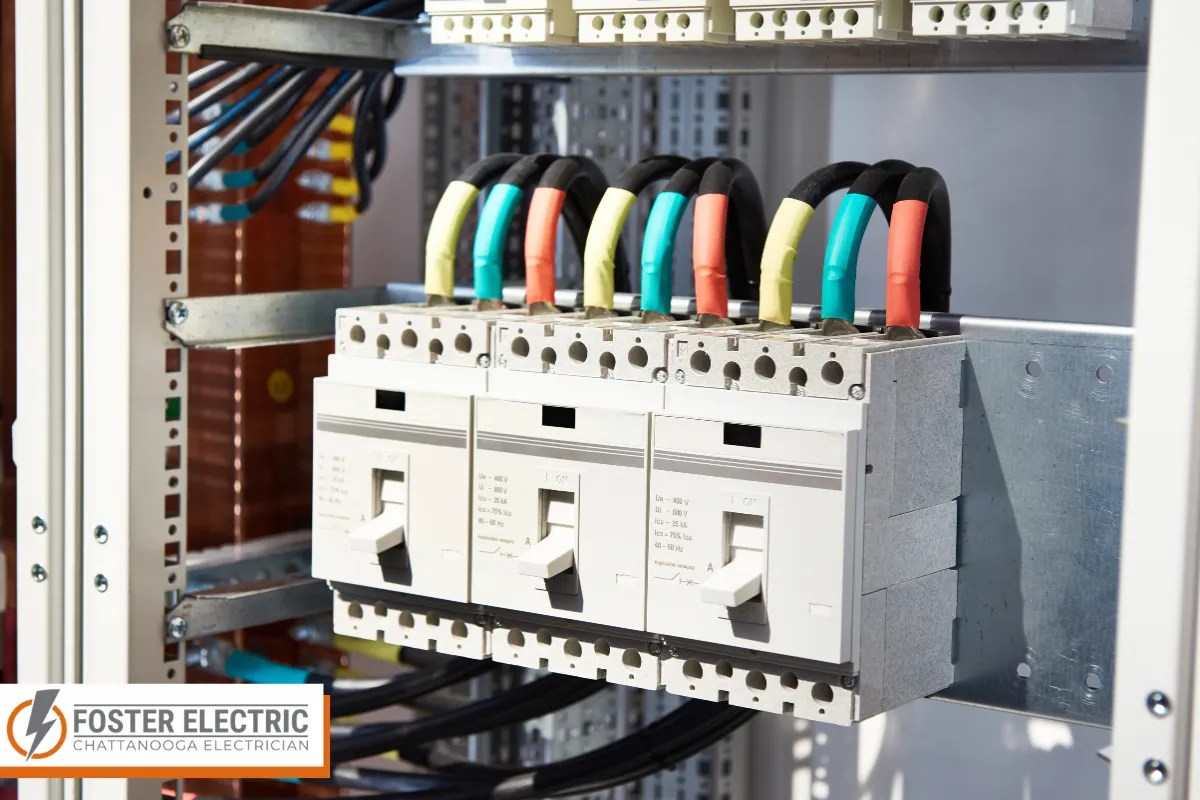
Circuit breakers are designed to protect electrical wiring from excessive current. When a circuit draws more electricity than its conductors can safely carry, the breaker should interrupt power before the wiring overheats.
Some warmth can occur during normal operation, particularly when a circuit carries a substantial load. However, a breaker that is painful to touch, noticeably hotter than neighboring breakers, discolored, buzzing, producing an odor, or repeatedly tripping should not be dismissed.
An overheated breaker may be responding to a problem elsewhere in the circuit. It may also be the source of the problem if its internal contacts, terminal connection, mounting point, or connection to the panel bus has deteriorated.
Electrical protection devices are intended to prevent wires from overheating and creating a fire hazard. Persistent heat indicates that the protective system, the connected load, or the electrical connection needs professional evaluation. Heat Develops Inside an Electrical Panel
Electricity encounters resistance as it moves through conductors, terminals, contacts, and connected equipment. Some resistance is expected. When resistance becomes excessive, more electrical energy is converted into heat.
A loose connection is especially concerning because a small contact area can carry the circuit’s full current. That condition concentrates heat at the connection point and can damage nearby insulation, the breaker body, the conductor, or the panel bus.
Loose connections and partially damaged conductors may create enough resistance to reach ignition temperatures. This is one reason panel troubleshooting involves more than checking whether the breaker handle remains in the “on” position. Common Reasons Circuit Breakers Overheat
Several conditions can produce similar symptoms. A qualified electrical contractor must evaluate the entire circuit rather than assuming every hot breaker needs the same repair.
1. The Circuit Is Carrying Too Much Load
An overloaded circuit occurs when connected equipment demands more current than the branch circuit is designed to carry safely.
This often happens when several high-wattage devices operate at once. Common examples include:
- Portable heaters
- Window air conditioners
- Hair dryers
- Toasters and countertop ovens
- Coffee makers
- Microwaves
- Vacuum cleaners
- Power tools
- Dehumidifiers
- Gaming and home-office equipment
A breaker may become warm before it trips because many residential breakers use a thermal element that responds to sustained overcurrent. The greater the overload, the faster the protective mechanism should react.
Frequent tripping, dimming lights, buzzing receptacles, warm wall plates, and burning odors are recognized signs of an overloaded or otherwise unsafe circuit. Resetting Does Not Correct an Overload
Resetting the breaker restores power, but it does not reduce the electrical demand.
When the same appliances remain connected, the circuit may overheat and trip again. Repeated resetting can also obscure an intermittent wiring defect or failing appliance.
The appropriate correction may involve redistributing equipment, installing a dedicated branch circuit, replacing damaged components, or evaluating whether the home’s panel and electrical service are adequately sized.
2. A Breaker Terminal Has Become Loose
The conductor attached to a breaker must be secured according to the equipment manufacturer’s requirements. If the connection is loose, electrical resistance can rise at the terminal.
Possible causes include:
- Improper installation
- Insufficient terminal torque
- Excessive terminal torque that damaged the conductor
- Conductor movement
- Repeated heating and cooling cycles
- Oxidation or corrosion
- An incompatible conductor or breaker
- More than one conductor installed where the terminal is not listed for it
A loose termination may produce concentrated heat without immediately drawing enough current to trip the breaker. This makes the condition particularly dangerous: the breaker may remain on while the connection continues deteriorating.
Only trained personnel should remove a panel cover. Turning off the main breaker does not necessarily de-energize every part inside the enclosure because service conductors may remain live.
3. The Breaker Is Worn, Damaged, or Defective
Circuit breakers contain mechanical and electrical components that can deteriorate.
Internal contacts may become pitted after repeated operation or fault interruption. The trip mechanism may weaken. The breaker may also lose a secure connection with the panel bus.
Warning signs include:
- A loose or unstable breaker handle
- Heat limited to one breaker
- Scorch marks around the breaker
- A crack in the breaker casing
- A breaker that will not reset
- A breaker that trips without an obvious load
- Heat at the point where the breaker attaches to the panel
- An electrical odor inside the enclosure
Replacing a breaker is not simply a matter of choosing another device with the same amperage. The replacement must be approved for the specific panel and suitable for the circuit conductors and application.
4. The Breaker Does Not Match the Panel
A breaker may appear to fit physically while still being unsuitable for the load center.
Panels are evaluated and labeled for specific breaker types. An unapproved device may not connect correctly to the bus, even when the handle and body seem to align. Poor contact can produce resistance, arcing, heat, and permanent bus damage.
The panel label, breaker designation, manufacturer instructions, conductor size, interrupting rating, and application must all be considered.
Installing a larger breaker to stop nuisance tripping is never an acceptable shortcut unless the entire circuit has been properly evaluated and designed for that rating. An oversized breaker may allow wiring to carry more current than it can safely withstand.
5. The Circuit Has a Damaged Conductor or Splice
Heat at the panel does not always originate inside the panel.
A loose splice, damaged receptacle, deteriorated conductor, failing switch, or defective appliance can affect current flow and circuit performance. Damaged insulation may also allow a short circuit or ground fault.
An unintended low-resistance current path can create a sudden surge, sparks, heat, and an immediate trip. Intermittent faults may appear only when equipment moves, moisture enters a box, or a damaged conductor expands under load.
Signs of a wiring fault can include:
- Crackling sounds
- Visible sparks
- A sharp burned-plastic odor
- Dead receptacles
- Intermittent power
- Tripping when one appliance starts
- A shock or tingling sensation
- Heat at an outlet or switch
- Discolored insulation
Overcurrent protection, grounding, arc-fault protection, and ground-fault protection perform different safety functions. A normal-looking breaker handle does not prove that the entire branch circuit is safe.
6. A High-Demand Appliance Needs a Dedicated Circuit
Large appliances may require an individual branch circuit because of their sustained operating load, startup current, or manufacturer requirements.
Depending on the equipment and installation, dedicated circuits may be appropriate for:
- Electric ranges
- Clothes dryers
- Water heaters
- Heating and cooling equipment
- Dishwashers
- Garbage disposals
- Microwaves
- Sump pumps
- Workshop machinery
- Electric vehicle charging equipment
A motor-driven appliance may briefly draw additional current during startup. A failing motor, compressor, heating element, or internal connection can increase demand further.
An electrical service evaluation can determine whether the existing circuit is correctly sized and whether the appliance itself may be malfunctioning.
7. Corrosion, Moisture, or Panel Damage Is Affecting Connections
Electrical panels should remain dry and protected from contamination.
Moisture can enter through plumbing leaks, condensation, damaged exterior equipment, improper conduit sealing, or water traveling along service conductors. Corrosion can then increase resistance and weaken connections.
Rust on the enclosure does not reveal the full extent of internal damage. Moisture may affect breaker terminals, neutral bars, grounding connections, bus components, and conductor insulation.
Do not touch a wet panel or stand in water near electrical equipment. Avoid attempting to dry, clean, or inspect energized components. Shut off power only when it can be done without approaching a hazardous area, and seek immediate professional help.
Warning Signs That Require Immediate Action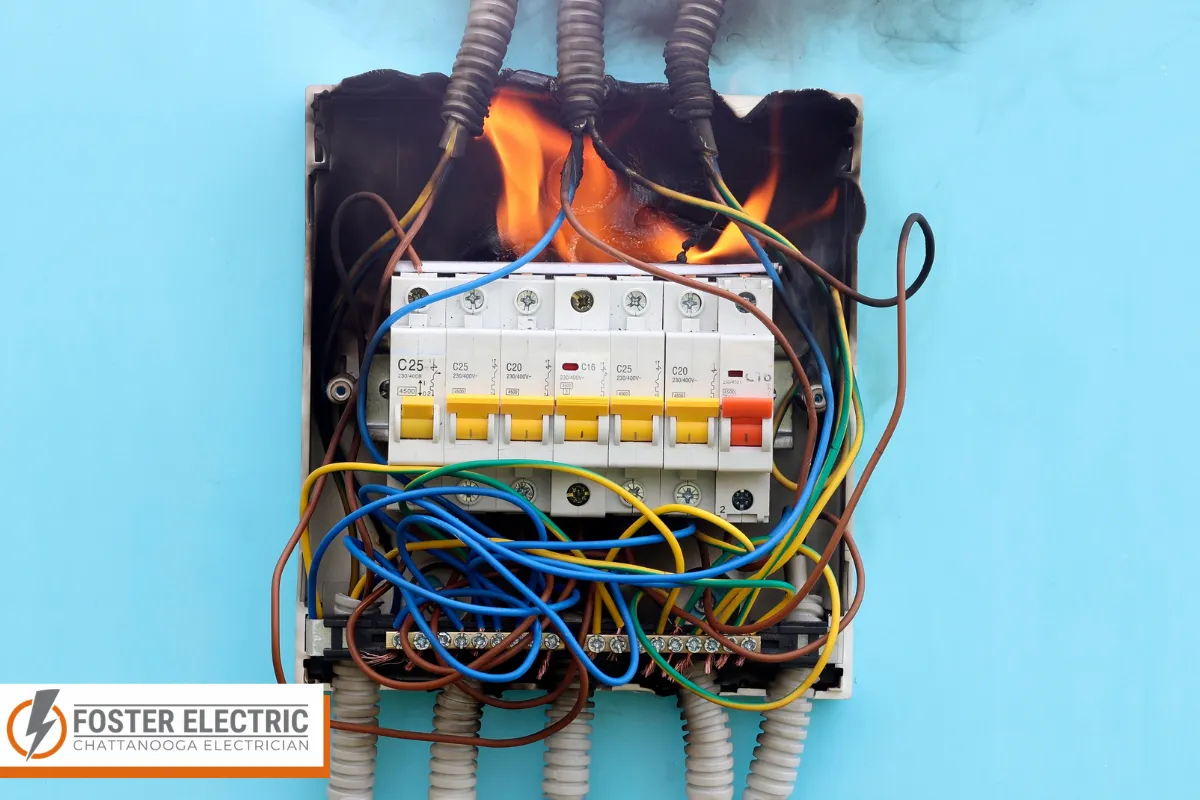
Not every electrical symptom represents the same level of urgency. The following conditions justify prompt attention:
- Smoke from the panel
- Visible arcing or sparks
- A strong burning odor
- Melted breaker material
- Scorch marks
- Loud crackling or buzzing
- A breaker that is too hot to approach safely
- Repeated tripping immediately after reset
- Partial power combined with flickering
- Water inside or around the panel
- Heat spreading across multiple breakers
- A tingling sensation from metal equipment
- Lights that brighten and dim unexpectedly throughout the home
Smoke, active arcing, or fire should be treated as an emergency. Leave the building, keep others away, and contact emergency services from a safe location.
Do not open the electrical panel to investigate. Removing the cover can expose energized parts and create an arc-flash, shock, or burn hazard.
Read Electrician in East Ridge, TN: How Often Should Circuit Breakers Be Replaced?
What East Ridge Homeowners Can Safely Do First
Homeowners can take limited steps without opening the panel or handling electrical conductors.
Step 1: Reduce the Connected Load
Turn off and unplug portable devices on the affected circuit, particularly heaters, cooking appliances, air conditioners, power tools, and other high-wattage equipment.
This may reduce immediate demand, but it should not be treated as proof that the circuit is safe.
Step 2: Note What Was Operating
Write down which lights, receptacles, appliances, and devices were in use when the breaker became hot or tripped.
Useful details include:
- The time the issue occurred
- How long the equipment had been operating
- Whether the breaker tripped
- Whether lights dimmed first
- Whether an odor or sound was present
- Whether the problem occurs during hot, wet, or humid conditions
- Whether a new appliance was recently added
- Whether construction or remodeling was recently completed
This information can help the electrician reproduce and isolate the condition.
Step 3: Leave a Suspicious Circuit Off
When a breaker is extremely hot, damaged, noisy, discolored, or associated with a burning smell, leave it off when that can be done safely.
Do not force a breaker handle, tape it in position, or repeatedly cycle it.
Step 4: Keep the Panel Area Clear
Maintain clear access to the panel. Remove stored boxes, furniture, shelving, cleaning products, and combustible materials that interfere with safe entry or ventilation.
Do not place rugs, curtains, or decorations over an electrical enclosure.
Step 5: Arrange Qualified Troubleshooting
A hot breaker is a symptom. The correct repair depends on what caused the heat.
Professional diagnosis may reveal a simple overloaded branch circuit, but it can also uncover bus damage, conductor deterioration, incompatible equipment, improper splices, a weak neutral connection, or an appliance fault.
Actions That Can Make the Hazard Worse
Certain improvised responses can defeat the protection built into the electrical system.
Never:
- Replace a breaker with a higher-amperage model merely to prevent tripping.
- Hold or tape a breaker in the “on” position.
- Remove the dead-front panel without proper training and protective procedures.
- Tighten terminals while equipment is energized.
- Install a breaker because it looks similar to the original.
- Move wires between breakers without evaluating conductor size and circuit requirements.
- Use extension cords as permanent wiring.
- Connect a major appliance to a light-duty power strip.
- Ignore heat because the breaker has not yet tripped.
- Spray cleaner, lubricant, or water into the panel.
Circuit protection must correspond to conductor capacity and equipment requirements. Overcurrent can overheat electrical equipment, damage insulation, and contribute to fire or shock hazards. n Electrician Diagnoses an Overheating Breaker
A professional inspection should identify the root cause rather than automatically replacing the breaker.
Reviewing the Panel and Circuit History
The electrician may ask when the problem began, which loads were operating, whether renovations were completed, and whether the breaker has been replaced before.
The panel directory and equipment labeling are also reviewed.
Inspecting for Heat Damage
With appropriate safety procedures, the technician examines the breaker, conductor insulation, terminal, bus connection, neutral bar, grounding components, and surrounding devices.
Indicators may include:
- Darkened metal
- Melted insulation
- Pitting
- Oxidation
- Loose mounting
- Discoloration
- Carbon deposits
- Deformed plastic
- Evidence of arcing
Damage to the bus may require a more extensive panel repair or replacement. Installing a new breaker onto a damaged connection point may not provide a safe, durable correction.
Measuring the Electrical Load
A clamp meter can be used to measure current while connected equipment operates.
The technician compares actual demand with the breaker rating, conductor capacity, appliance requirements, and applicable load calculations.
A circuit can experience an intermittent overload even when its load appears normal during a brief inspection. For that reason, operating patterns and startup conditions matter.
Checking Terminal Integrity
Connections are evaluated for compatibility, conductor condition, and manufacturer-specified installation requirements.
Simply tightening a visibly overheated terminal may not be enough. Heat can weaken the breaker, anneal or damage the conductor, compromise insulation, and harm the panel bus.
Testing Connected Equipment
If tripping occurs when a specific appliance starts, that equipment may need to be isolated and tested.
A malfunctioning heating element, motor winding, compressor, cord, plug, or internal connection may cause excessive current or leakage.
Evaluating the Panel’s Overall Capacity
Older or heavily expanded electrical systems may no longer match current household demand.
Added HVAC equipment, kitchen appliances, workshops, hot tubs, home offices, and vehicle charging can place new demands on an existing installation.
An electrical contractor may recommend load balancing, dedicated circuits, panel repairs, or a service upgrade based on measured conditions and calculated requirements.
Breaker Heat Versus Normal Operating Warmth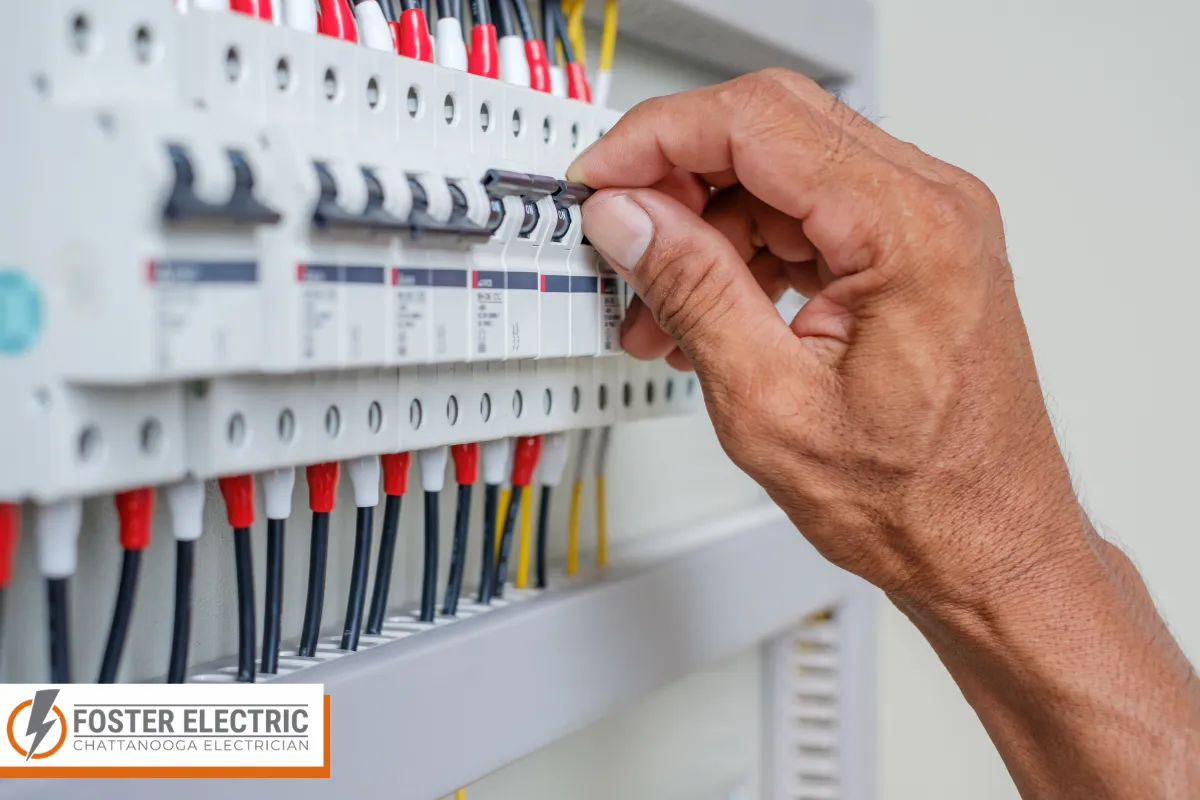
Homeowners often ask whether any warmth is acceptable.
Electrical equipment can generate some heat under load. The more useful question is whether the temperature is abnormal for that breaker, load, and environment.
Concern increases when:
- One breaker is much hotter than adjacent units
- The temperature rises rapidly
- Heat continues after loads are reduced
- The breaker trips repeatedly
- The enclosure or panel cover is discolored
- An odor, sound, or flicker accompanies the heat
- The breaker serves a modest load but becomes very warm
- The problem has recently worsened
Touch alone is not a reliable diagnostic method. It does not identify internal temperature, load current, connection resistance, or hidden bus damage. Avoid repeated contact with suspect equipment.
Local Permits, Licensing, and Inspection Requirements
Electrical work in East Ridge must follow applicable local requirements, equipment instructions, and adopted safety rules.
The City of East Ridge states that trade-work permits, including electrical permits, must be pulled by a contractor licensed in Tennessee. Tennessee also requires an electrical permit before installing wiring that is subject to inspection under state rules.
Permit requirements depend on the scope and jurisdiction. Troubleshooting or a limited component replacement may be handled differently from new circuits, panel replacements, service changes, additions, and substantial rewiring.
A qualified professional should verify the applicable permit and inspection process before starting regulated work. Homeowners should not assume that a small-looking alteration is exempt, particularly when it changes circuit capacity, panel equipment, service conductors, or permanent wiring.
Repairs That May Follow a Breaker Inspection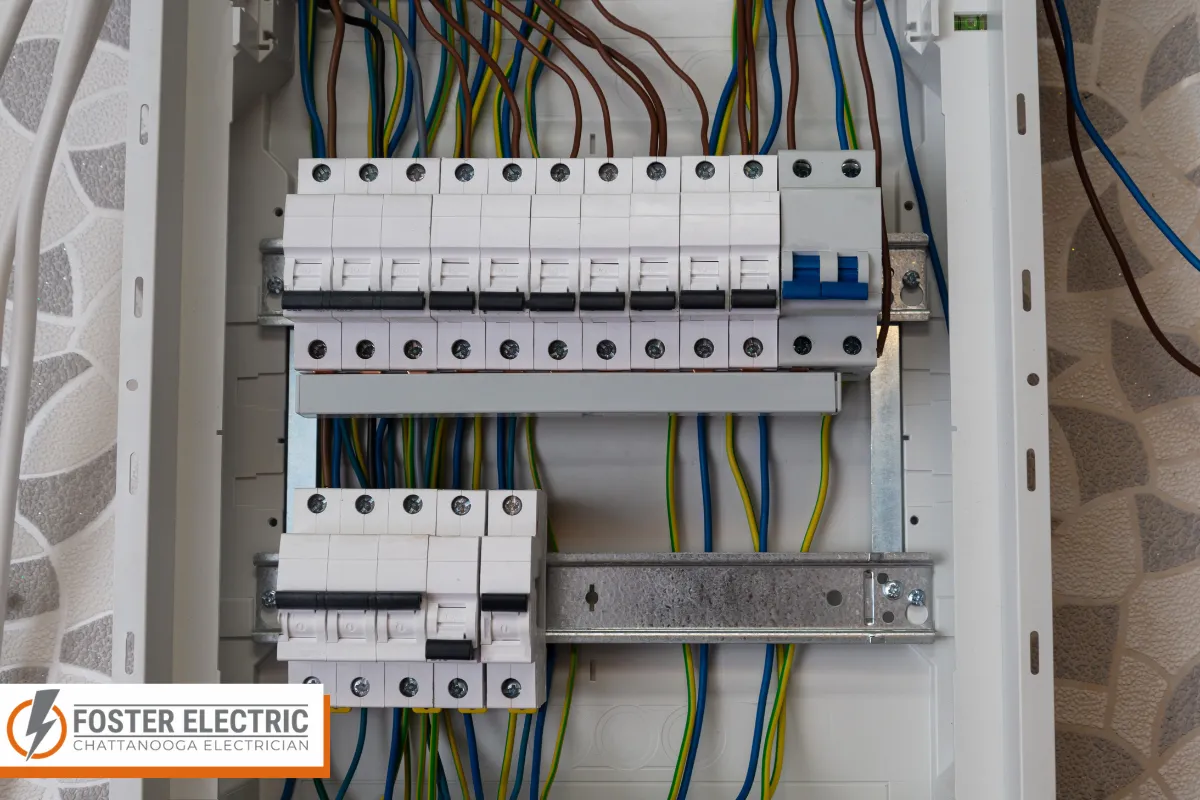
The final recommendation should match the diagnosed condition.
Possible repairs include:
- Replacing a damaged breaker with an approved model
- Repairing or replacing a damaged conductor
- Correcting an improper termination
- Replacing a damaged receptacle, switch, or junction
- Installing a dedicated appliance circuit
- Redistributing branch-circuit loads
- Repairing panel bus damage
- Replacing a deteriorated panel
- Correcting grounding or bonding defects
- Adding required protective devices
- Upgrading the electrical service
- Repairing moisture entry
- Coordinating appliance repair
A breaker replacement alone will not correct an overloaded circuit, loose splice, damaged bus, or malfunctioning appliance.
Reducing the Chance of Future Overheating
Preventive habits can reduce stress on branch circuits and help reveal problems earlier.
Learn Which Devices Share Each Circuit
A clear panel directory helps homeowners avoid concentrating multiple high-demand devices on one branch circuit.
Labels should identify rooms, major appliances, outdoor loads, and dedicated equipment accurately.
Plug Major Appliances Directly Into Proper Receptacles
Heat-producing and high-demand appliances should not rely on undersized extension cords or ordinary power strips.
Extension cords are intended for temporary use and can overheat when they are damaged, covered, coiled, undersized, or loaded beyond their rating.
Pay Attention to Gradual Changes
A circuit that has operated normally for years but suddenly begins tripping deserves investigation.
Changes may result from a deteriorating connection, aging appliance, damaged conductor, added equipment, or environmental moisture.
Schedule an Inspection Before Major Electrical Additions
Before installing new HVAC equipment, kitchen appliances, shop machinery, or charging equipment, have the existing panel and service capacity evaluated.
Planning allows circuits, conductor sizes, protective devices, and service loads to be coordinated correctly.
Do Not Ignore Warm Receptacles or Switches
Heat elsewhere on a branch circuit can indicate loose connections or excessive load.
Warm or discolored wall plates, flickering lights, burning smells, and buzzing sounds are recognized signs of an unsafe electrical condition. afest Next Step for an Overheated Breaker
A circuit breaker protects wiring by disconnecting power when abnormal current conditions occur. It should not become a recurring obstacle that homeowners work around.
When a breaker overheats, reduce the load, avoid opening the panel, leave a visibly damaged circuit off, and arrange professional troubleshooting. The technician should evaluate the breaker, conductors, connections, panel bus, connected appliances, grounding path, and actual circuit demand.
Prompt electrical service can prevent a localized defect from spreading into damaged insulation, an unusable panel, appliance failure, or a fire hazard. The goal is not merely to restore power. It is to identify why the heat developed and correct the condition safely.
Electrician in East Ridge, TN – Foster Electric
When an overheated breaker threatens your comfort or safety, Foster Electric provides dependable help from an experienced electrician in East Ridge, Tennessee, and prominent surrounding areas. We inspect panels, measure circuit loads, check terminations, identify damaged components, and explain practical repair options before work begins. Our goal is to correct the cause rather than reset a breaker and leave the underlying hazard behind. Whether you need troubleshooting, panel repairs, dedicated circuits, or a broader electrical service evaluation, we bring careful workmanship and clear communication to every visit. Call Foster Electric at (423) 826-7270 or fill out our contact form to schedule service. We are ready to help protect your property, restore reliable power, and prevent a hot breaker from becoming a larger electrical problem.
Frequently Asked Questions
Can I replace a hot breaker with any breaker carrying the same amp rating?
No. Matching the amp rating is only one part of choosing a replacement. The breaker must be approved for the specific panel, compatible with its bus design, suitable for the conductor, and appropriate for the circuit’s intended use. Breakers that look alike may have different mounting arrangements, contact designs, interrupting ratings, or listing limitations. An incompatible breaker may fit loosely, create excessive resistance, damage the bus, or fail to provide proper protection. The existing circuit must also be checked for overloads and heat damage. Replacing the device without diagnosing the original cause can allow the same dangerous condition to continue.
Can outdoor humidity cause a breaker inside the house to overheat?
Humidity alone does not normally make a sound breaker overheat, but moisture intrusion can contribute to corrosion and connection problems. Water may enter through damaged service equipment, poorly sealed conduit, wall penetrations, leaks, condensation, or exterior components. Corrosion increases resistance and may affect breakers, terminals, neutral bars, bus connections, and conductor surfaces. The resulting heat can develop gradually and may be accompanied by rust, discoloration, flickering, buzzing, or intermittent power. Never touch a wet panel or remove its cover. A professional should locate the moisture source, assess internal damage, and determine whether affected components can be repaired or require replacement.
Will homeowners insurance pay for damage caused by an overheated breaker?
Coverage depends on the policy, the cause of the loss, maintenance history, exclusions, and the type of resulting damage. A policy may cover sudden fire or smoke damage while treating deterioration, corrosion, faulty workmanship, or deferred maintenance differently. Homeowners should document visible conditions from a safe distance, preserve invoices and inspection reports, and contact the insurer promptly after a covered incident. Avoid altering damaged equipment before the insurer provides instructions, unless immediate work is necessary to make the property safe. An electrician’s written findings can help distinguish the failed component, likely cause, recommended repairs, and damage affecting the panel or connected circuits.
Is thermal imaging enough to prove that a circuit breaker is defective?
Thermal imaging is a valuable screening tool, but temperature patterns must be interpreted alongside load measurements and a physical inspection. A hot image may reveal an overloaded circuit, loose terminal, deteriorated bus connection, unbalanced load, damaged breaker, or heat transferred from nearby equipment. The camera does not identify the cause by itself. Surface temperature can also be influenced by enclosure design, ambient temperature, ventilation, and how long the circuit has operated. A proper evaluation may include current measurements, equipment-label review, conductor inspection, terminal assessment, voltage testing, and examination for arcing or discoloration. Repairs should be based on combined evidence, not one image alone.
Does the age of an electrical panel determine whether it must be replaced?
Age is an important consideration, but it does not automatically determine whether replacement is required. A relatively old panel may remain serviceable if it is correctly installed, undamaged, properly maintained, and adequate for the property’s electrical demand. A newer panel may still require replacement after water exposure, overheating, improper modifications, bus damage, or incompatible breaker installation. The decision should consider physical condition, available capacity, manufacturer labeling, replacement-part availability, repeated faults, conductor condition, service size, and planned electrical additions. A professional evaluation can distinguish an isolated repair from conditions that justify a complete panel or electrical service upgrade.
Disclaimer: This article provides general safety information, not instructions for working inside energized equipment. Permit needs and repair requirements vary by scope. Have a qualified professional evaluate overheated breakers and verify current East Ridge requirements before electrical work begins.
Disclaimer: This article provides general safety information, not instructions for working inside energized equipment. Permit needs and repair requirements vary by scope. Have a qualified professional evaluate overheated breakers and verify current East Ridge requirements before electrical work begins.
Read Electrician in East Ridge, TN: What Electrical Tasks Are Safe for Homeowners to Do?