
Why Homeowners Are Questioning Traditional Lighting
Residential Electrician in Chattanooga, TN is a phrase many homeowners search after opening an electric bill that feels higher than it should be. Outdated lighting is often the silent culprit. Incandescent and halogen bulbs waste energy, generate excess heat, and burn out quickly, leading to constant replacements and rising costs. That frustration grows when lights flicker, rooms feel dim, or fixtures simply cannot keep up with modern needs. The solution many electricians recommend is LED lighting upgrades. But are LEDs really worth the upfront investment, or are they just another trend? This article breaks down the real costs, long-term savings, safety considerations, and local code requirements so you can decide with confidence.
How LED Lighting Changed Residential Electrical Design
Lighting has evolved more in the last 20 years than in the previous century. LED technology introduced a shift not only in energy use but in how electricians design residential electrical systems.
Traditional bulbs rely on heating a filament to produce light. LEDs use semiconductors that convert electricity directly into illumination. That difference is why LEDs consume far less power and last significantly longer.
For a residential electrician, this shift means rethinking fixture compatibility, dimmer controls, and load calculations. For homeowners, it opens the door to better lighting quality, lower energy bills, and safer operation.
The True Cost of LED Light Upgrades in Chattanooga Homes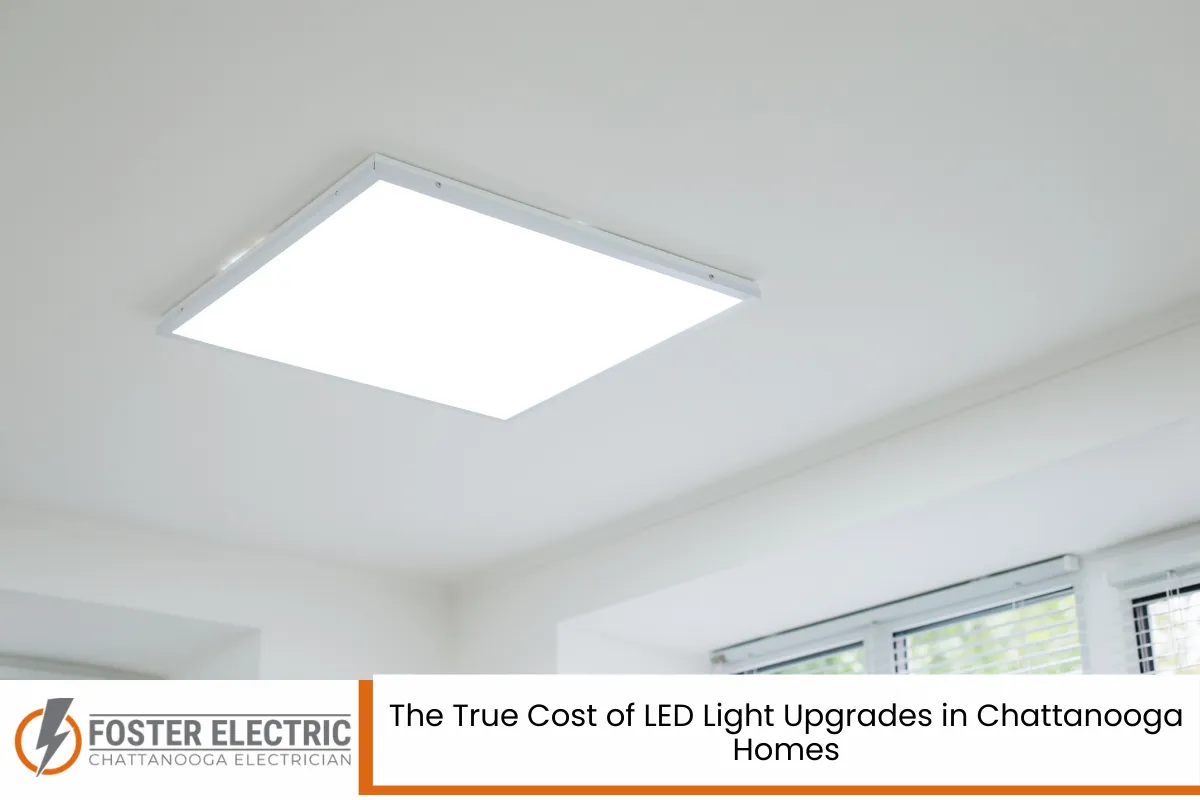
Upfront Expenses Homeowners Should Expect
The initial cost of LED upgrades can surprise some homeowners. LED bulbs cost more than incandescent options, and full-home upgrades may involve:
- New LED-compatible fixtures
- Updated dimmer switches
- Electrical service adjustments
- Labor from a licensed electrician
In Chattanooga, pricing varies based on home size, ceiling height, fixture count, and electrical panel capacity. While a single bulb swap is inexpensive, whole-home conversions are an investment.
Why Labor Quality Matters More Than the Bulb Price
A qualified electrical contractor ensures LEDs are installed correctly. Improper installation can cause flickering, premature failure, or electrical hazards. This is especially important in older Chattanooga homes with aging wiring or outdated electrical panels.
Energy Savings That Add Up Over Time
Understanding Kilowatt-Hour Reduction
LEDs use up to 75% less energy than incandescent bulbs and significantly less than CFLs. Over time, this reduction translates into noticeable monthly savings.
For example:
- A 60-watt incandescent bulb can be replaced by a 9-watt LED
- Multiply that savings across 30 to 50 fixtures
- Add daily usage over an entire year
The math quickly favors LED lighting.
Long-Term Financial Impact
Most homeowners recover their LED upgrade costs within two to four years through energy savings alone. After that point, reduced utility bills become pure financial gain. A residential electrician can calculate projected savings based on your specific usage patterns.
LED Lifespan and Maintenance Advantages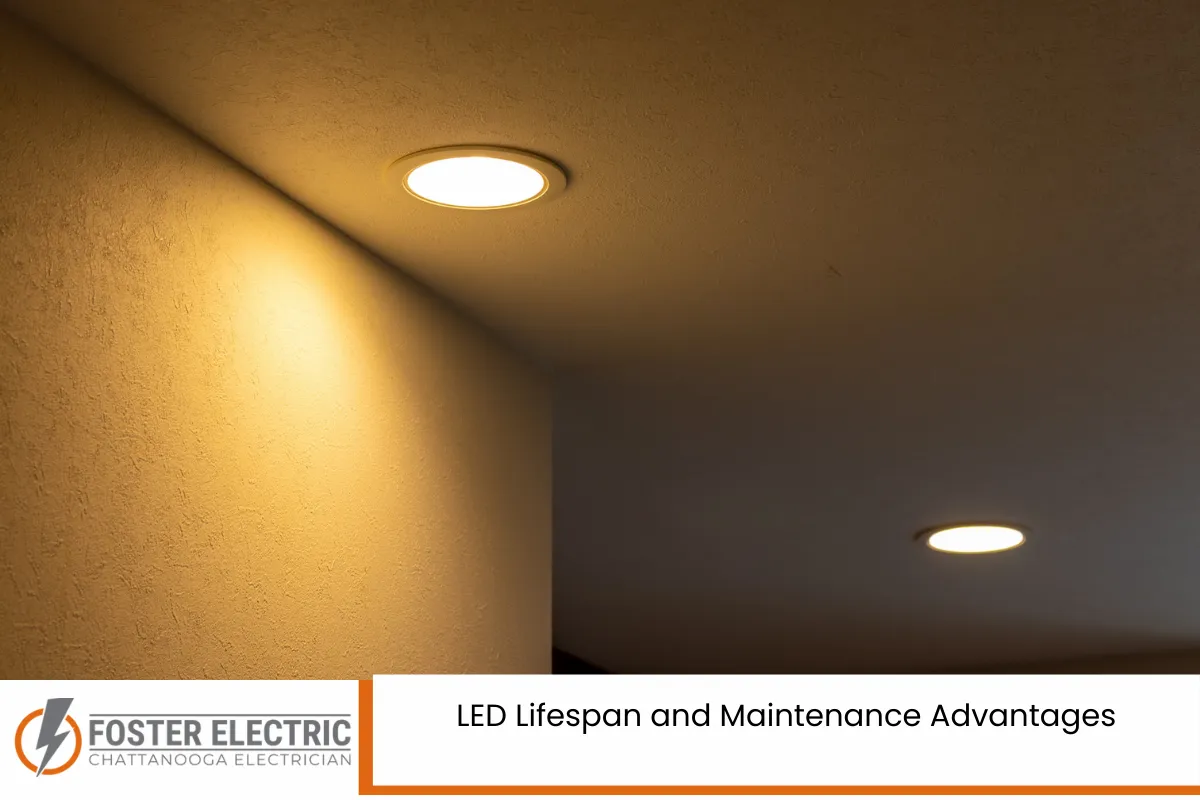
Fewer Replacements, Less Hassle
Incandescent bulbs may last 1,000 hours. LEDs often exceed 25,000 hours. That means fewer ladder climbs, fewer store trips, and less frustration.
For homes with vaulted ceilings or hard-to-reach fixtures, this benefit is significant. Electrical service calls for bulb replacement become far less frequent.
Consistent Performance Over Time
LEDs maintain brightness longer and do not fail suddenly. Instead of burning out, they gradually dim over many years, giving homeowners time to plan replacements.
Light Quality: A Common Concern Among Homeowners
Color Temperature Options Explained
Early LED lighting had a reputation for harsh or cold light. Modern options now offer a full range of color temperatures:
- Warm white for living areas
- Neutral white for kitchens
- Daylight tones for task lighting
An experienced electrician helps homeowners select lighting that complements their space rather than overwhelms it.
Improved Visual Comfort
LEDs reduce glare, provide instant brightness, and maintain consistent color rendering. This improves visibility and reduces eye strain, especially in workspaces and reading areas.
Safety Benefits of LED Lighting Upgrades
Reduced Heat Output
Traditional bulbs convert most energy into heat. LEDs remain cool, reducing fire risk and lowering strain on fixtures and wiring. This is especially important in older homes where insulation clearance may be limited.
Lower Electrical Load on Wiring
Because LEDs draw less power, they reduce overall electrical demand. This is beneficial for homes with older wiring systems and helps prevent overloaded circuits.
A licensed electrician ensures the electrical system safely supports new lighting layouts.
Chattanooga Electrical Codes and LED Installations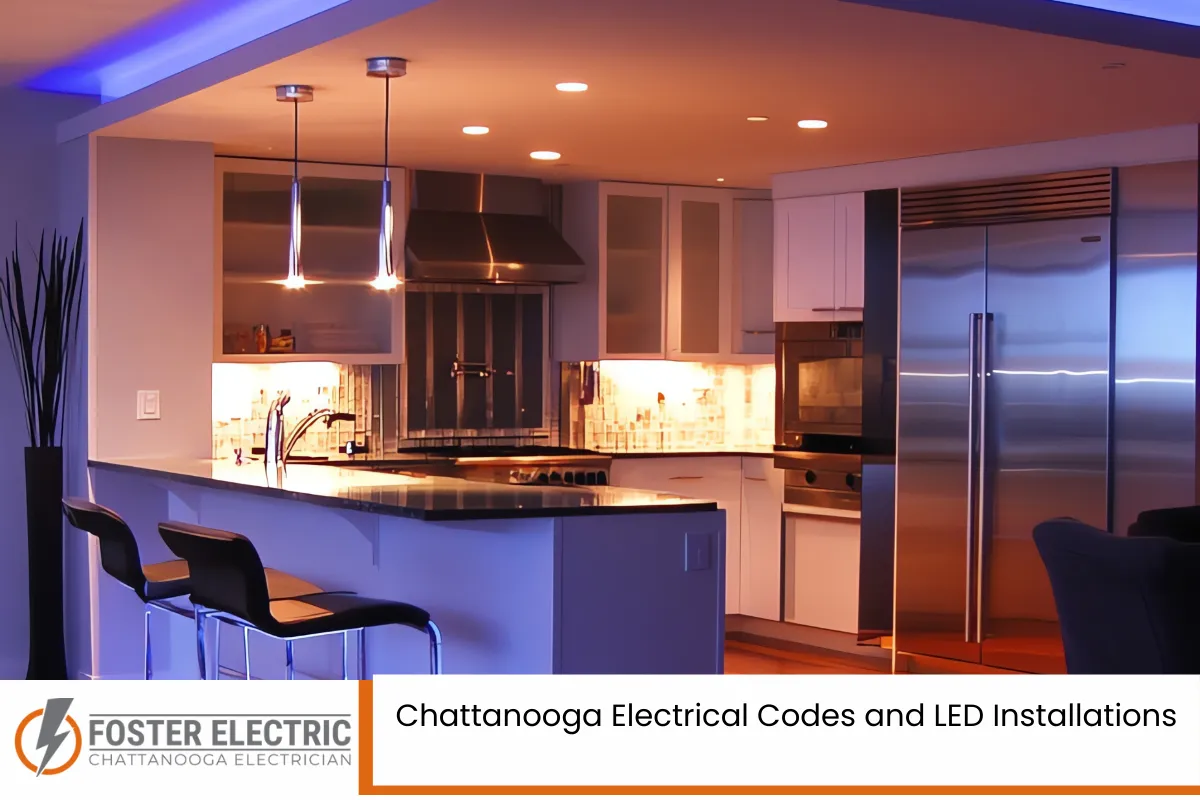
Compliance with Local and State Regulations
Tennessee follows adopted versions of the National Electrical Code, with local amendments enforced in Chattanooga. Any electrical service involving wiring, fixtures, or panel work must meet these standards.
LED upgrades that involve fixture replacement or circuit changes should be completed by a licensed electrical contractor to remain code-compliant.
Permits and Inspections
Some lighting projects require permits, especially when modifying circuits or adding new fixtures. A professional electrician handles permitting and inspection coordination, protecting homeowners from future compliance issues.
Are LEDs Worth It for Older Chattanooga Homes?
Addressing Legacy Wiring Concerns
Older homes may have knob-and-tube wiring, aluminum wiring, or outdated panels. LED upgrades can expose existing electrical issues.
A residential electrician evaluates wiring condition before installation and may recommend upgrades to ensure safety and compatibility.
Modernizing Without Full Rewiring
In many cases, LED lighting can be installed without full rewiring, making it a practical modernization step that improves efficiency without major renovation.
Environmental Impact of LED Lighting
Reduced Carbon Footprint
Lower energy consumption reduces demand on power plants. Over time, LED lighting contributes to lower greenhouse gas emissions.
Fewer Materials in Landfills
Because LEDs last longer, fewer bulbs end up discarded. Many LED components are recyclable, making them a more sustainable choice.
When LED Upgrades Make the Most Sense
LED lighting upgrades are particularly valuable when:
- Energy bills are consistently high
- Fixtures are frequently failing
- Lighting quality is uneven or inadequate
- Homes are being prepared for resale
- Electrical systems are being updated
A knowledgeable electrician helps homeowners prioritize areas with the greatest return on investment.
Making the Right Decision for Your Home
LED upgrades are not a one-size-fits-all solution. Factors such as home age, electrical capacity, usage habits, and budget all matter.
Consulting with a trusted electrical contractor ensures upgrades are planned strategically rather than piecemeal. The right approach maximizes savings, safety, and comfort.
Residential Electrician in Chattanooga, TN – Foster Electric 
We are Foster Electric, and we help homeowners make smart, long-term lighting decisions. As a trusted residential electrician in Chattanooga, Tennessee, we specialize in LED light upgrades that improve efficiency, safety, and comfort. Our team evaluates your current electrical system, recommends code-compliant solutions, and installs lighting designed to last. We handle everything from fixture upgrades to full electrical service improvements, always with attention to local regulations. If you are wondering whether LED lighting is worth the cost, we are ready to help you decide. Call us at (423) 892-6759 or fill out our contact form to schedule a consultation. We proudly serve Chattanooga and surrounding areas.
Frequently Asked Questions
How do LED upgrades affect home resale value?
LED lighting can improve resale value by lowering energy costs and modernizing a home’s appearance. Buyers often look for efficient electrical systems, and updated lighting signals proper maintenance. While it may not directly increase appraisal value dollar-for-dollar, it improves marketability and buyer confidence.
Can LEDs work with existing dimmer switches?
Not all dimmers are compatible with LED technology. Using incompatible dimmers can cause flickering or buzzing. A licensed electrician can replace outdated dimmers with LED-rated controls to ensure smooth operation and extend bulb lifespan.
Are LED lights safe for enclosed fixtures?
Some LEDs are rated for enclosed fixtures, while others are not. Using the wrong type can trap heat and shorten lifespan. An electrician verifies fixture ratings and selects appropriate bulbs to maintain safety and performance.
Do LED upgrades require electrical panel changes?
Most LED upgrades do not require panel changes because LEDs draw less power. However, if the panel is outdated or overloaded, an electrician may recommend upgrades to support future electrical needs safely.
How long does a full-home LED upgrade take?
Project timelines vary based on home size and fixture count. Many homes can be upgraded within one to two days. Larger projects involving rewiring or panel work may take longer but are scheduled to minimize disruption.
Disclaimer: This article is for general informational purposes only and does not replace professional electrical advice. All electrical work should be performed by a licensed electrician in compliance with local and state regulations.
Read Do I Need a Chattanooga Electrician to Install a Smart Thermostat?