
The Overlooked Role of East Ridge Electricians in Data and Network Cabling
Are you searching for an East Ridge electrician who can do more than just fix flickering lights or install outlets? Many business owners and homeowners face the growing challenge of setting up secure, reliable data and network cabling in their properties. As technology advances, the need for structured cabling, fast internet, and seamless connectivity is more essential than ever. Yet, confusion exists over who to call for these services—should it be your trusted electrician, or do you need a separate low voltage contractor? This article answers the question: Can electricians handle data and network cabling? You’ll learn how a skilled electrical contractor offers both electrical and data solutions, saving you time, money, and headaches in East Ridge and surrounding Tennessee communities.
Why Data and Network Cabling Matters More Than Ever
With the rise of smart homes, cloud computing, and remote work, having strong data and network cabling is a necessity. Whether you own a small business, manage a large office, or just want to stream movies without interruption, structured cabling forms the backbone of your technology. It impacts everything from internet speed to phone systems and even security camera installation. Without proper cabling, you can experience slow connections, dropped signals, or even costly network failures.
Electricians vs. Low Voltage Contractors: Understanding the Difference
The Scope of a Licensed Electrician
Electricians are trained, licensed professionals who install, maintain, and repair electrical systems. Their skills cover wiring, lighting, breaker panels, surge protection, and more. Many people assume their work is limited to power circuits, but most modern electricians in East Ridge have expanded their expertise.
The Role of a Low Voltage Specialist
Low voltage contractors typically handle data, voice, video, and security wiring—think Ethernet cables, coaxial lines, or fiber optic runs. They specialize in structured cabling for phones, computers, and audio-visual setups.
Why the Line is Blurring
The lines between electrical service and data cabling are blurring. Today’s electrical contractor often receives cross-training in low voltage systems. With the right certifications, your East Ridge electrician is fully equipped to install network wiring that meets current codes and industry standards.
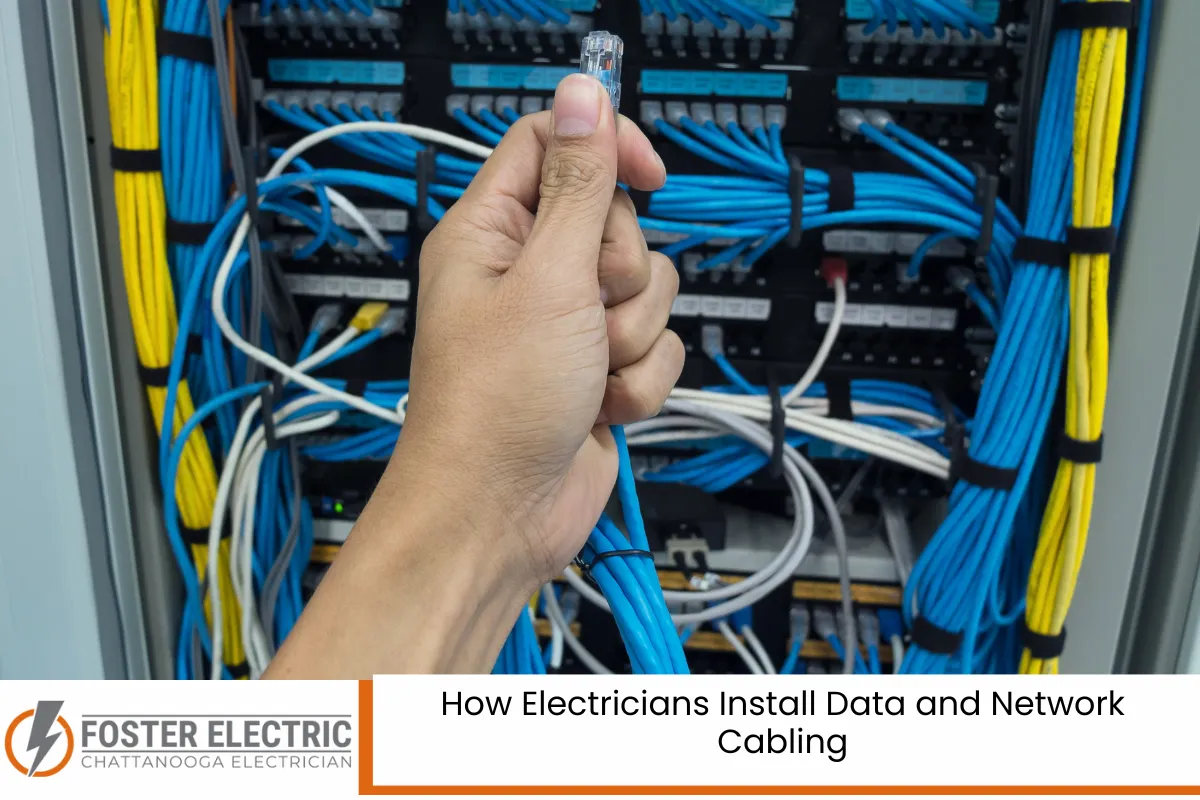
How Electricians Install Data and Network Cabling
Project Assessment and Design
Every data cabling project begins with an evaluation. Your electrician will inspect your property, assess your needs, and create a layout for cable runs. They will consider factors like distance, future expansion, interference, and compliance with local codes.
Choosing the Right Cabling: Cat5e, Cat6, and Beyond
There are several types of network cables—Cat5e, Cat6, and Cat6a are the most common for residential and commercial projects. Electricians help you choose the right one based on bandwidth requirements, speed, and budget. Cat6, for example, is ideal for gigabit speeds and is a popular choice for offices and smart homes in East Ridge.
Professional Installation for Reliable Results
Electricians ensure clean, organized cable runs. This includes pulling cables through walls, installing outlets, and mounting network racks. Their training in safety and code compliance reduces the risk of damage, fire hazards, or future maintenance headaches.
Testing and Certification
Once installed, your electrician will test the cabling for connectivity, speed, and performance. They may use tools to certify the network meets industry standards, which is especially important for commercial projects and new constructions.
The Benefits of Choosing an Electrician for Data Cabling Projects
One Contractor, Multiple Services
Working with an electrical contractor means you get a single point of contact for all your wiring needs—whether you’re upgrading lighting, adding power outlets, or installing new network drops. This simplifies scheduling and often saves money compared to hiring multiple specialists.
Compliance with Electrical Codes
Electricians are trained to follow strict local, state, and national electrical codes. This ensures your data cabling is safe, up to code, and won’t void your insurance or create liability issues.
Seamless Integration with Power Systems
Network cabling often needs to work alongside electrical wiring—especially in renovations or new builds. An experienced East Ridge electrician knows how to keep data lines free from electrical interference, ensuring your devices run smoothly.
Troubleshooting and Future Upgrades
Should issues arise—such as slow connections, dropped signals, or damaged cables—your electrician can quickly diagnose and fix the problem. Plus, they can advise you on future upgrades, like moving from copper to fiber optic or adding power-over-Ethernet devices.
Read East Ridge Electrician: Is It Safe to Install Smart Plugs and Switches Myself?
What Types of Data and Network Cabling Can Electricians Handle?
Ethernet Cable Installation
Electricians can install Cat5e, Cat6, and Cat6a Ethernet cables for computer networks, VoIP phones, and internet-enabled devices.
Structured Cabling for Businesses
For commercial clients, electricians design and install structured cabling systems that support networking, surveillance cameras, access controls, and paging systems.
Coaxial and Fiber Optic Cabling
Modern electricians are trained to handle coaxial cables for TV and internet, and many are also certified to install fiber optic lines for ultra-fast connections.
Smart Home and IoT Wiring
From Wi-Fi access points to smart thermostats and home automation, electricians can install all the wiring needed for today’s connected homes.
Audio/Visual and Security Wiring
Whether you need HDMI cables for conference rooms or wiring for alarm systems, an electrical contractor can handle it all.
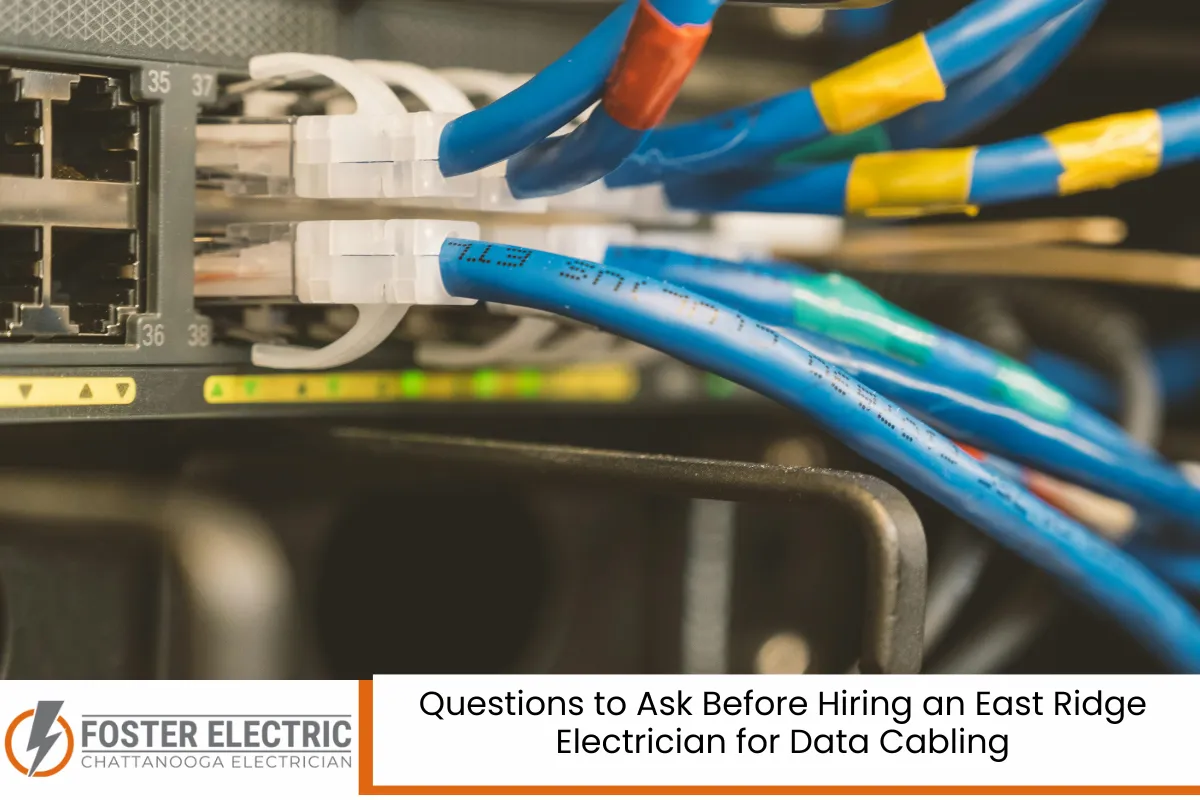
Questions to Ask Before Hiring an East Ridge Electrician for Data Cabling
- Are you licensed and insured in Tennessee?
- Do you have experience with both electrical and low voltage network systems?
- What types of data cables do you recommend for my project?
- Can you provide references or examples of similar work in the East Ridge area?
- How do you ensure your work meets local codes and safety standards?
Asking these questions ensures you choose an electrician who is up to date with technology, safety, and regulations.
Signs Your Property Needs Data and Network Cabling Upgrades
- Slow or unreliable internet in certain rooms
- Devices losing connection or dropping signals
- Expanding your office or adding workstations
- Upgrading to smart home technology
- Adding security cameras or access control systems
If you notice any of these, an electrical contractor can assess your needs and design a cabling solution that supports your goals.
Mistakes to Avoid When Planning Network Cabling
Ignoring Future Growth
Don’t just plan for today’s devices—think about tomorrow’s needs. Adding extra cabling now can save you money and hassle down the road.
Skimping on Quality
Cutting corners with cheap cables or improper installation can lead to slow speeds and signal loss. Always invest in quality materials and professional service.
DIY Wiring
It may seem easy to run your own cables, but improper installation can cause code violations, safety hazards, or expensive repairs. Always trust a licensed East Ridge electrician for critical cabling projects.
How Professional Electrical Service Adds Value to Your Property
A well-designed network cabling system improves productivity, supports new technologies, and increases property value. Businesses benefit from reliable phone systems, fast Wi-Fi, and secure data transfer. Homeowners enjoy better streaming, smart devices, and peace of mind knowing their wiring is safe and future-proof.
East Ridge Electrician – Foster Electric

If you’re looking for a reliable electrician in East Ridge or the surrounding Tennessee areas, Foster Electric is your go-to solution for electrical service and network cabling. Our team is experienced, licensed, and ready to handle any wiring project—whether it’s upgrading your data network, adding new outlets, or making your property more energy efficient. We prioritize safety, code compliance, and quality workmanship on every job. Don’t let network issues or electrical problems slow you down. Call us today at (423) 826-7270 or fill out our simple online contact form to schedule your free consultation with a trusted electrical contractor. Experience fast response, honest pricing, and a commitment to customer satisfaction—choose Foster Electric for all your electrical needs.
Frequently Asked Questions
1. Can electricians run both electrical and network cables together in the same conduit?
No, for safety and to prevent interference, the National Electrical Code (NEC) generally requires that power cables and data/network cables be separated. This is because electrical lines can cause electromagnetic interference (EMI) that disrupts data signals. Electricians use separate conduits or cable trays for data wiring to maintain signal integrity and code compliance. Always hire a knowledgeable electrician who follows best practices and local regulations to avoid costly mistakes.
2. How do I know if my property is ready for structured cabling installation?
An electrician will conduct a site assessment to check the layout, existing infrastructure, and any potential obstacles. They’ll look at your property’s construction, accessibility for cable runs, and your current and future technology needs. This assessment helps in creating a customized plan that ensures seamless integration with your electrical and data systems.
3. Is there a warranty on data and network cabling installed by electricians?
Most reputable electrical contractors provide warranties on both the labor and materials for network cabling projects. The length and terms of the warranty can vary—some offer one-year coverage, while others may provide extended warranties. Be sure to discuss warranty details with your East Ridge electrician before work begins, and keep documentation for your records.
4. How long does it take to install data cabling in a typical home or office?
The timeframe depends on the size of the property, the number of cable runs, and the complexity of the installation. For a standard home, installation might take one to two days. Larger commercial projects can take several days to a week. Your electrician will provide an estimated schedule after assessing your needs and developing a plan.
5. What maintenance is required for data and network cabling systems?
Generally, data cabling systems require minimal maintenance, but regular inspections are recommended, especially in high-traffic commercial environments. Electricians may check for physical damage, loose connections, or signs of wear. Keeping cables organized and labeled also makes future troubleshooting or upgrades easier. If you experience connectivity issues, your electrical contractor can test and repair the cabling as needed.
Disclaimer: This article is for informational purposes only and does not constitute legal or professional advice. Always consult a licensed electrician or electrical contractor for your specific project needs and local code requirements. Information is accurate as of the time of publication but may be subject to change.
Read East Ridge Residential Electrician: What Should I Do if I Smell Burning From an Outlet?