
When Your Lights Blink, Your Home Is Sending a Warning
East Ridge Electrician is a phrase many homeowners search when their lights flicker the moment a refrigerator, HVAC unit, or microwave kicks on. It may seem minor at first. A quick dimming. A brief flicker. But over time, it becomes more noticeable and more concerning. You start to wonder: Is this normal, or is something wrong with my wiring?
The truth is, flickering lights are often a symptom of an underlying electrical issue. Left unaddressed, that issue can damage appliances, raise energy costs, or even create a fire hazard. The good news is that a qualified electrician can diagnose the problem and provide a safe, lasting solution. Let’s break down what’s happening and what you should do next.
Why Lights Flicker When Appliances Start
When you turn on a large appliance, it draws a surge of electrical current. Certain appliances—like air conditioners, heat pumps, washing machines, and garbage disposals—require more power during startup than during normal operation. This is known as inrush current.
If your electrical system cannot handle that sudden demand, the voltage momentarily drops. That voltage drop causes nearby lights to dim or flicker.
Some flicker is normal. Excessive flicker is not.
Common causes include:
- Voltage fluctuations
- Overloaded circuits
- Loose wiring connections
- Undersized electrical panels
- Aging service equipment
- Utility supply issues
Understanding the difference between harmless and hazardous flickering requires professional evaluation from an experienced electrical contractor.
Minor Flicker vs. Serious Electrical Trouble
Brief, Slight Dimming
If your lights dim for a split second when a large appliance starts, and then return to normal immediately, this may be a normal voltage fluctuation. Modern homes with properly sized panels and dedicated circuits typically handle this without issue.
Frequent or Noticeable Flickering
You may have a bigger problem if:
- Lights flicker throughout the house, not just in one room
- Flickering gets worse over time
- Lights brighten and dim randomly
- You hear buzzing from outlets or switches
- Circuit breakers trip regularly
These signs point to a potential wiring issue, panel capacity problem, or service line concern that requires professional electrical service.
Overloaded Circuits and Shared Wiring
One of the most common reasons for flickering lights is overloaded circuits. Many older homes in East Ridge were built decades ago, when electrical demand was much lower. Back then, homes did not have multiple large appliances, home offices, gaming systems, and high-efficiency HVAC systems running simultaneously.
If your refrigerator and kitchen lights share the same circuit, every time the compressor starts, it draws power away from the lights.
An electrician can:
- Inspect your breaker panel
- Identify overloaded circuits
- Install dedicated circuits for major appliances
- Rebalance loads across the panel
This not only stops flickering but also reduces wear on your appliances and wiring.
Loose Connections: A Hidden Fire Risk
Loose wiring connections are more serious than simple overload. When wires are not tightly secured, they create resistance. Resistance generates heat. Heat increases the risk of electrical fire.
Warning signs include:
- Flickering lights in specific rooms
- Warm outlets or switches
- Burning smell
- Discolored outlet covers
- Intermittent power loss
Loose connections can occur at:
- Outlet terminals
- Light fixtures
- Switch boxes
- Breaker panel connections
- The meter base
Under Tennessee regulations, major electrical repairs, panel work, and service upgrades must be completed by a properly licensed professional. In Hamilton County, permits are typically required for service changes or panel replacements, and inspections must meet National Electrical Code standards adopted by the state.
Is Your Electrical Panel Too Small?
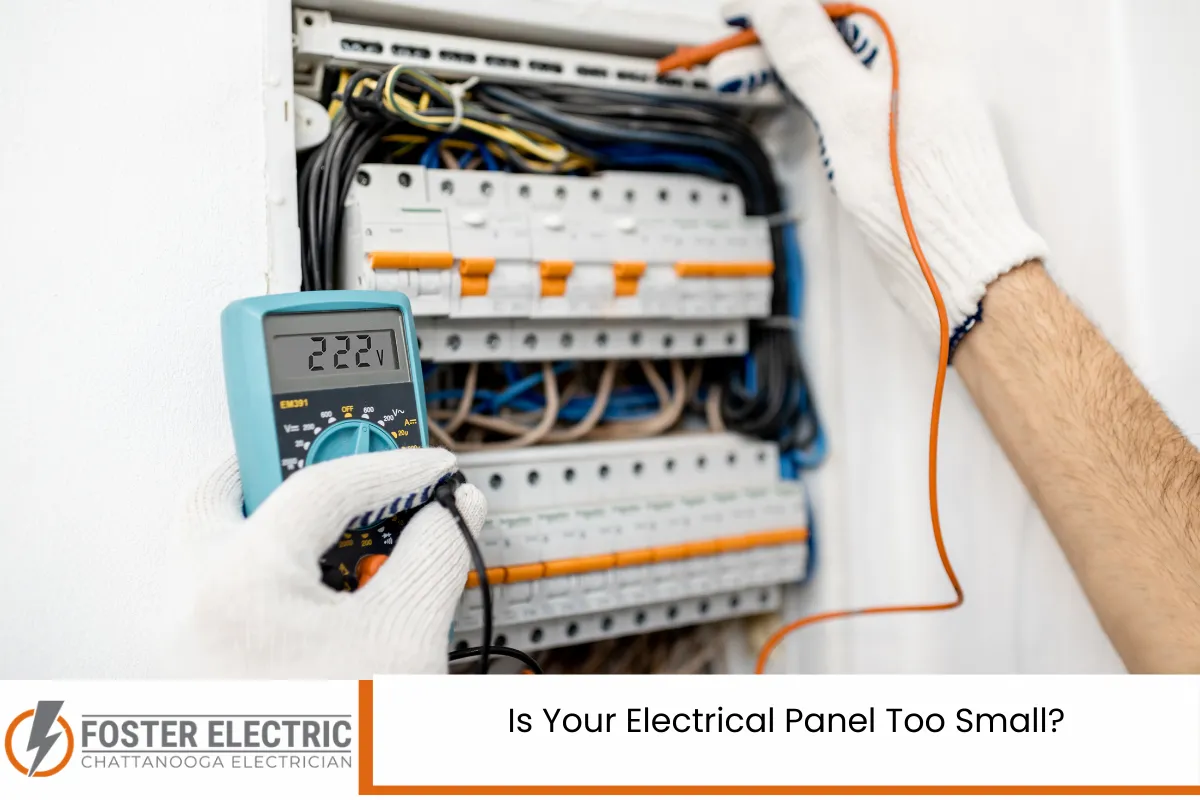
Many homes built before the 1990s were equipped with 100-amp panels. Today’s homes often require 150 or 200 amps to safely power modern appliances and electronics.
If your panel is undersized, you may experience:
- Repeated light flickering
- Frequent breaker trips
- Limited space for new circuits
- Warm breakers
- Inconsistent voltage
An electrical contractor can perform a load calculation to determine whether your current panel meets your home’s demand.
Upgrading to a 200-amp panel often resolves flickering issues tied to insufficient capacity.
Voltage Drop and Utility Issues
Sometimes the problem is not inside your home.
Voltage drop can also originate from:
- Aging service lines
- Loose utility connections
- Transformer issues
- Shared neighborhood load problems
If lights flicker throughout the house or your neighbors report similar issues, your electrician may coordinate with the local utility provider to test incoming voltage levels.
Appliances That Commonly Cause Flickering
Certain appliances are more likely to cause temporary dimming due to high startup demand:
- Central air conditioning systems
- Heat pumps
- Refrigerators
- Microwaves
- Dishwashers
- Electric water heaters
- Washing machines
- Sump pumps
If flickering only occurs when one specific appliance runs, that appliance may need its own dedicated circuit.
LED Lights and Modern Electrical Sensitivity
LED lighting is more sensitive to voltage fluctuations than older incandescent bulbs. Even minor variations in voltage can cause visible flicker.
Common LED-related causes include:
- Incompatible dimmer switches
- Low-quality bulbs
- Loose neutral wires
- Driver failures
An experienced electrician can determine whether the issue is fixture-related or system-wide.
Whole-Home vs. Single-Room Flickering
If It’s Just One Room
Likely causes:
- Loose wiring
- Overloaded branch circuit
- Faulty light switch
- Poor fixture connection
If It’s the Entire House
Possible causes:
- Main service connection issue
- Panel capacity problem
- Utility feed concerns
- Failing main breaker
Whole-house flickering should be evaluated promptly to prevent damage or safety risks.
When Flickering Means Emergency
Call for immediate electrical service if you notice:
- Burning odor
- Sparks
- Crackling sounds
- Blackened outlets
- Breakers that will not reset
- Sudden loss of power
These are not minor annoyances. They can indicate dangerous overheating or failing components.
How a Professional Diagnoses the Issue
A qualified electrical contractor will typically:
- Inspect the breaker panel
- Check load distribution
- Test voltage levels
- Tighten electrical connections
- Evaluate grounding and bonding
- Inspect service conductors
- Perform load calculations
Accurate diagnosis is essential. Guesswork can lead to unnecessary repairs.
Electrical Code Compliance in East Ridge, Tennessee
Tennessee adopts the National Electrical Code statewide. Electrical installations must meet current NEC standards, and local authorities in Hamilton County oversee permitting and inspection requirements for service upgrades and panel replacements.
Homeowners should know:
- Electrical panel upgrades usually require a permit
- Only licensed electricians may perform major service work
- Improper DIY repairs can void insurance coverage
- Electrical inspections may be required during home sales
Hiring a licensed professional ensures compliance with local and state regulations.
The Cost of Ignoring Flickering Lights
Small problems grow over time.
Ignoring flickering lights can result in:
- Damaged appliances
- Reduced bulb lifespan
- Increased energy waste
- Electrical fires
- Expensive emergency repairs
Addressing issues early is almost always more affordable than waiting for failure.
Preventing Future Electrical Problems
Proactive maintenance makes a difference.
Consider:
- Electrical safety inspections every few years
- Surge protection installation
- Panel upgrades when remodeling
- Dedicated circuits for large appliances
- Replacing outdated wiring
Homes in East Ridge that are over 30 years old may benefit from a comprehensive evaluation by a trusted electrician.
A Safer, More Reliable Home Starts with Proper Electrical Care
Lights flickering when appliances turn on is not something to ignore. While some minor dimming may be normal, persistent flickering usually signals a deeper issue within your electrical system. Whether it’s an overloaded circuit, loose connection, undersized panel, or voltage irregularity, a licensed electrical contractor can pinpoint the cause and provide a safe solution.
Protecting your home means ensuring your electrical service is modern, balanced, and code-compliant. If your lights are sending signals, it’s time to listen.
East Ridge Electrician – Foster Electric
At Foster Electric, we understand how frustrating and concerning flickering lights can be. As a trusted electrician serving East Ridge, Tennessee and the surrounding areas, we provide reliable electrical service designed to keep your home safe and efficient. Whether you need a panel upgrade, dedicated circuit installation, wiring repair, or a full electrical inspection, we are ready to help.
We take pride in delivering professional workmanship and clear communication. When you call Foster Electric at (423) 826-7270, you speak directly with a team that values your time and safety. Don’t ignore warning signs in your home. Contact us today to schedule an inspection or fill out our contact form to get started. We are here to keep your power running safely and smoothly.
Frequently Asked Questions
1. Can flickering lights damage my appliances?
Yes, repeated voltage fluctuations can shorten the lifespan of sensitive electronics and large appliances. When voltage drops or spikes occur frequently, internal components experience additional stress. Over time, this can lead to premature failure of motors, compressors, circuit boards, and power supplies. Installing whole-home surge protection and ensuring your electrical panel is properly sized can help stabilize voltage and protect your investment. If flickering is persistent, having your electrical system tested ensures that your appliances operate within safe voltage ranges and prevents unnecessary repair or replacement costs.
2. Does weather affect flickering lights?
Storms, high winds, and heavy rain can impact utility lines and transformers. Lightning strikes and tree limbs contacting power lines can cause temporary voltage disturbances. Even without a full outage, you may notice flickering during severe weather. However, if flickering continues after the storm passes, the issue may be inside your home. A professional evaluation can determine whether the cause is utility-related or due to internal wiring or panel concerns.
3. Is it safe to replace a breaker myself if lights flicker?
Breaker replacement should only be handled by a licensed electrician. Working inside a panel exposes you to live components, even when the main breaker is turned off. Improper installation can cause arcing, overheating, or failure to trip during overload conditions. Tennessee regulations require licensed professionals for many types of electrical service work to ensure compliance with safety codes. A professional ensures proper torque specifications, compatibility, and load balancing.
4. Can smart home devices contribute to flickering?
In some cases, smart switches and dimmers that are not compatible with certain LED bulbs can cause flicker. Incompatible drivers, outdated firmware, or improper wiring configurations may create irregular lighting behavior. While smart devices typically do not cause system-wide flickering, they can contribute to localized lighting issues. Ensuring compatibility and professional installation reduces these risks and improves performance.
5. How often should I have my electrical system inspected?
For most homes, an inspection every 3 to 5 years is recommended. Older homes or properties with recent renovations may benefit from more frequent evaluations. Inspections help identify worn wiring, outdated panels, grounding issues, and overloaded circuits before they become hazardous. Regular assessments by a qualified electrician provide peace of mind and ensure your electrical service remains safe, efficient, and compliant with modern code requirements.
Disclaimer: This article is for informational purposes only and does not replace professional electrical advice or inspection. Electrical work should be performed by a licensed electrician in accordance with Tennessee laws and local code requirements. Always consult a qualified professional for diagnosis and repair of electrical issues.
Read East Ridge Electrician: What Causes Frequent Circuit Breaker Trips?