
Every electrician who works on older homes in East Ridge has seen the same pattern. The lights flicker when the air conditioner kicks on, breakers trip without explanation, and the panel mounted in the garage or utility closet looks like it has not been touched since the house was built. These are not minor annoyances. An aging or failing electrical panel is a serious household safety hazard that puts your home, your family, and your property at risk of fire, shock, or damaged electronics. If you are wondering whether your panel needs attention, the answer is usually yes, and sooner rather than later. A qualified electrical contractor who follows Chattanooga-area codes and NEC standards can determine exactly what your system needs. This post covers clear signs, timelines, and practical steps so you know when replacement is necessary.
Key Takeaways
- Frequent circuit breaker trips, a burning smell near the panel, or a panel enclosure that feels warm to the touch are urgent warning signs that require immediate professional evaluation.
- Most electrical panels last about 25 to 40 years, and many older East Ridge homes built before the early 1990s are now due for inspection or replacement.
- Modern electrical panels provide safer overcurrent protection, AFCI and GFCI integration, and enough capacity for today’s appliances, EV chargers, and HVAC systems.
- Only a licensed electrician in East Ridge, TN should evaluate and replace an electrical panel; local code requires permits and inspections for this kind of work.
What Your Electrical Panel Actually Does in Your East Ridge Home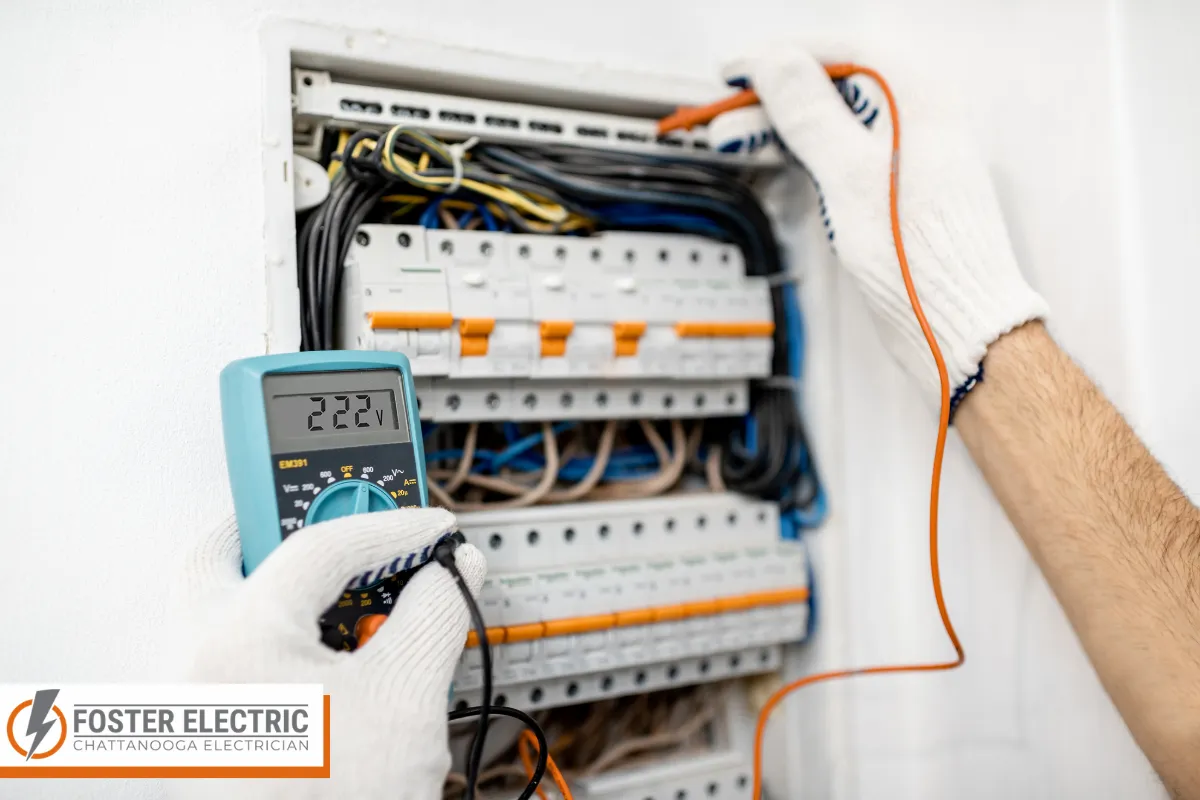
Your electrical panel is the control center for every circuit in your house. Power from the utility company flows through overhead or underground service entrance conductors into your meter, then into the main breaker panel. The main breaker can shut off all power at once; below it, individual branch circuit breakers distribute electricity to your lights, outlets, appliances, and dedicated equipment like your HVAC system or water heater. Each breaker is sized to protect a specific wire gauge, and if a circuit draws too much current, the breaker trips to prevent overheating.
Older homes in East Ridge and nearby areas like TN Fort Oglethorpe sometimes still have fuse boxes instead of breaker panels. Fuse boxes use fusible elements that melt under excess current and must be replaced after every overload. A subpanel is a secondary distribution point downstream from the main panel, used to serve a detached garage, an addition, or a workshop. Older electrical panels often lack modern safety features like AFCI or GFCI integration, and older fuse boxes should be upgraded for safety to meet current standards. Modern electrical panels in East Ridge and Hamilton County must comply with the National Electrical Code as adopted in the region. Correct panel sizing, proper grounding, and adequate surge protection are essential for reliable electrical service.
Clear Warning Signs Your Electrical Panel Should Be Replaced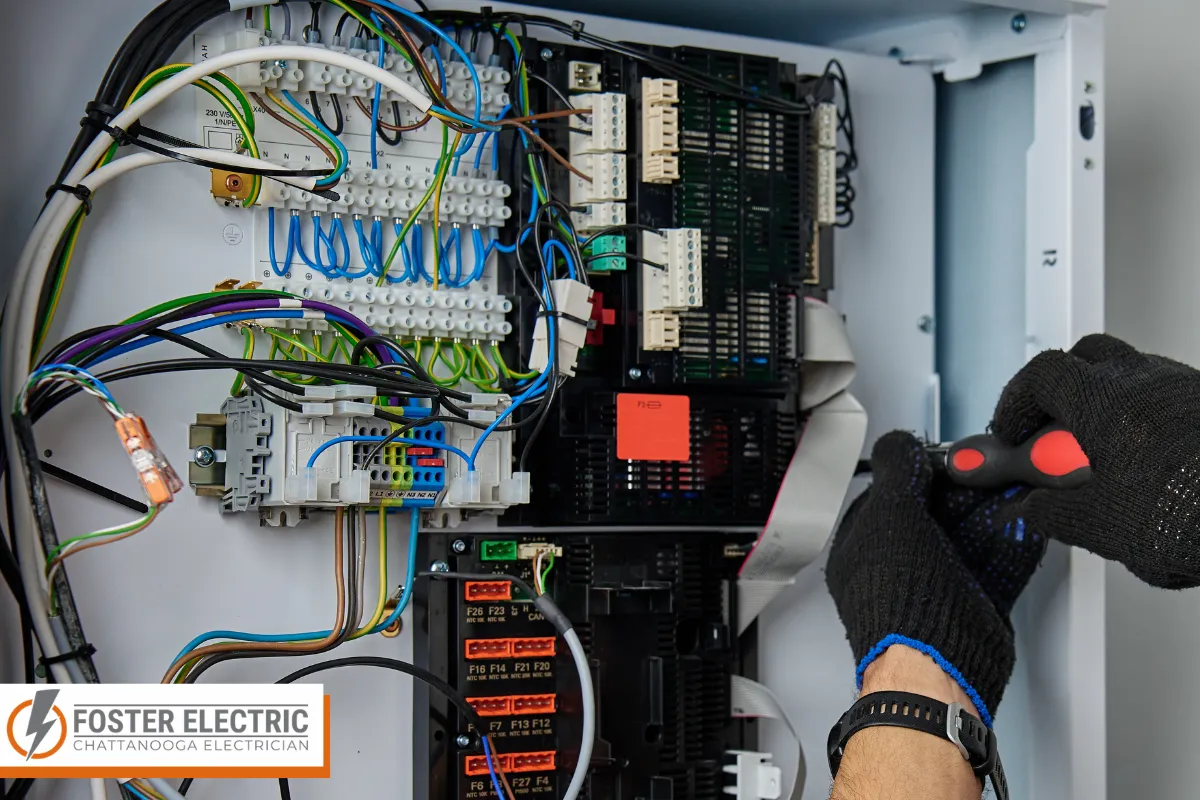
Physical warning signs from your panel are not a problem you can address next month. They require prompt evaluation by a licensed professional before a manageable issue becomes an emergency.
Frequent breaker tripping indicates an overloaded circuit or insufficient panel capacity. If you reset a circuit breaker and it trips again within minutes, the panel or the circuit wiring may be failing internally. Breakers that refuse to reset at all, or circuits that go dead without any obvious cause, point to damaged components or compromised bus bars. Faulty breakers may fail to trip during an actual overload, and breakers that fail to trip increase fire risk to a degree that justifies immediate replacement. Flickering or dimming lights often suggest the panel cannot distribute power effectively across its circuits.
Visible damage tells its own story. Visible rust, corrosion, or water damage in an electrical panel compromises safety and signals that the enclosure no longer protects its internal components. Moisture intrusion can lead to rust and corrosion inside electrical panels over time, even in a climate like East Ridge where humidity is common. Heating panels and visible scorch marks are indicators of potentially serious electrical issues. Visible burn marks near the panel indicate immediate replacement is needed. Buzzing, crackling, or a panel that feels hot when you touch the door are all red flags.
Odors deserve separate attention. Electrical panels should not feel warm or emit burning smells under normal operation. A burning smell or overheating from the panel indicates active component failure, meaning something inside is arcing or melting. A panel that feels warm to the touch can indicate excessive current or loose connections, and discolored breakers or warm wall surfaces around the panel area are part of the same problem.
Certain brands carry documented risks that go beyond normal aging. Outdated brands like Federal Pacific Electric or Zinsco pose a fire risk due to internal component failures. Federal Pacific and Stab-Lok panels are known fire hazards, and Federal Pacific and Stab-Lok panels pose serious fire hazards due to breakers that can fuse to the bus bar and fail to disconnect during overloads. Federal Pacific and Stab-Lok panels should be replaced immediately regardless of the panel’s apparent condition. Zinsco panels have similar issues with aluminum busbars that oxidize and overheat. Many home inspectors and insurance adjusters in the Chattanooga area flag these brands on sight.
If you ever see smoke, sparks, or experience a shock from your panel, shut off the main breaker only if it is safe to do so. Call emergency services first, then contact an electrical service provider for assessment.
Read Signs of a Failing Electrical Panel: Insights from an Electrician in East Ridge, TN
Age, Capacity, and Lifestyle Changes That Make Replacement Necessary
Most electrical panels last about 25 to 40 years under normal conditions. Homes built before the early 1990s throughout East Ridge, TN Soddy Daisy, TN Harrison, and TN Collegedale are now at or past the upper end of that range. Even if the panel still functions, older panels may not meet modern safety standards and are often undersized for the loads a contemporary household places on them.
Modern homes consume far more power than the houses these panels were designed to serve. A new HVAC system, a tankless water heater, a home office with multiple monitors, a gaming setup, and outdoor living spaces with dedicated circuits each add load to the panel. Panels rated below 150 or 200 amps struggle to support simultaneous modern appliances. Overloaded panels can overheat and cause electrical fires, and the risk increases with every additional device you plug in.
Symptoms of an undersized panel include limited or no remaining breaker spaces, double-tapped breakers where two wires connect to a single breaker terminal that is not rated for it, warm wire terminals, and the need to constantly juggle which appliances can run at the same time. Overreliance on extension cords indicates inadequate panel capacity for modern electrical demands; if you are running power strips and extension cords to compensate for too few outlets, your panel and branch circuits are not keeping up.
Service ratings of 60 amps or 100 amps are usually inadequate for most updated homes. A 200-amp service is now the common recommendation for homeowners adding major loads. Installing an EV charger, adding a hot tub, equipping a garage workshop, or putting in a new HVAC system often triggers the need for a panel upgrade and a complete service size evaluation.
During property sales or insurance renewals in East Ridge, older or unsafe electrical panels are regularly flagged. Inspectors note the brand, age, and condition; adjusters review the report before issuing or renewing a policy. If the panel fails review, the homeowner may be required to replace it before the transaction can close.
Safety, Code Compliance, and Local Requirements in East Ridge, TN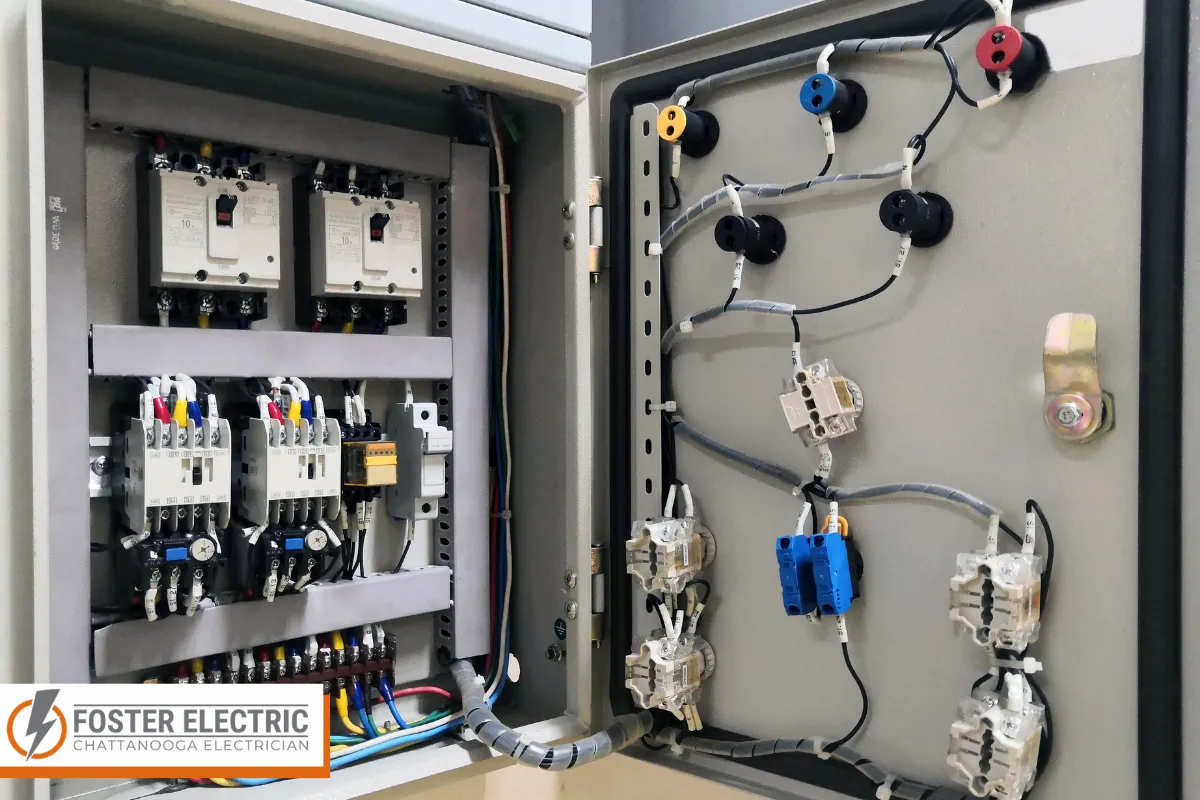
Electrical safety in Tennessee is regulated at both the state and local level. An electrical panel replacement is not a DIY project under any circumstance, and East Ridge enforces that standard through its Building Codes Department.
East Ridge is classified as an exempt jurisdiction under Tennessee’s State Electrical Program, which means the city issues its own permits and conducts its own inspections for electrical work rather than deferring to the state. Tennessee adopted the NEC 2017 statewide; the Chattanooga region may follow later editions for new construction. Electrical codes require proper permitting and inspection for panel upgrades, and pulling a permit before work begins is not optional. Unlicensed work or skipped permits can void your homeowners insurance, fail future inspections, and create legal liability for the property owner.
Proper grounding, bonding, and overcurrent protection matter in every room of the house. Arc-fault circuit interrupters protect against electrical arcs that cause fires; ground-fault circuit interrupters protect against shock in wet areas like kitchens, bathrooms, garages, and outdoor circuits. Tennessee’s AFCI requirements vary by jurisdiction, but bedroom circuits in most areas must have AFCI protection.
Insurance and real estate transactions add another layer of urgency. Local homeowners’ insurance may deny coverage for homes with certain outdated electrical panels, and inspectors in areas like TN Red Bank, GA Signal Mountain, and East Ridge routinely flag panels that present safety concerns. Addressing panel condition before listing a home or renewing a policy avoids last-minute delays and unexpected costs.
Only a licensed electrician can legally relocate a panel, increase service amperage, or coordinate with the utility company to disconnect and reconnect the service drop or lateral. Working inside a live panel is extremely dangerous and should only be done by trained professionals with proper protective equipment and lockout procedures.
Repair, Upgrade, or Full Replacement: How an Electrician Decides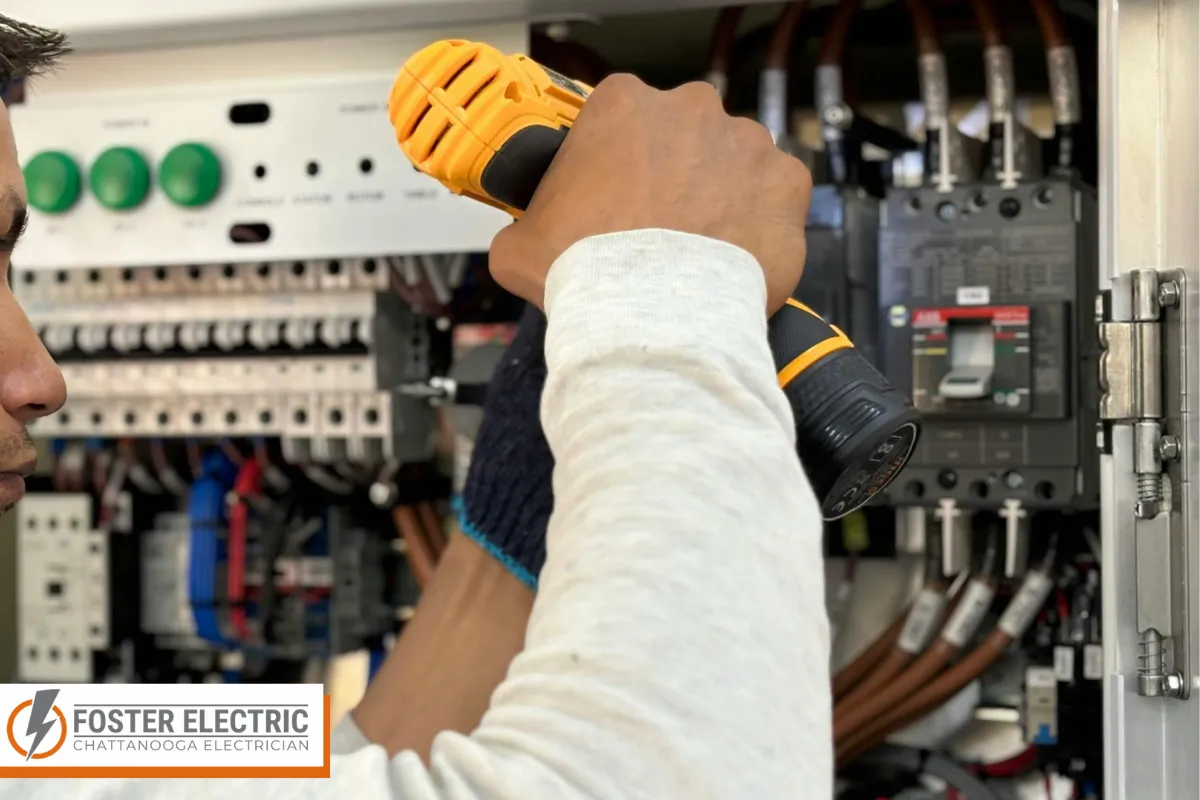
Not every panel issue means a full tear-out and replacement. Sometimes a targeted repair or small upgrade is enough to restore safe, reliable operation.
Repairs make sense when the current panel is structurally sound, carries no recall or brand risk, and still has adequate capacity. Replacing a single defective circuit breaker, tightening loose connections, adding missing labels, or installing a small subpanel for limited expansion are all common repair-level jobs. These are efficient solutions when the panel itself is in good condition and matches the home’s actual power needs.
Full replacement becomes necessary when the panel carries an obsolete brand with documented failure rates, when corrosion has reached the bus bars, when melted components are visible, or when the panel cannot safely accept modern breakers or required AFCI and GFCI devices. Older fuse boxes should be upgraded for safety in nearly every case, as replacement fuses of the correct rating are increasingly difficult to source and the protection they offer is less precise than modern breakers.
An experienced electrical contractor evaluates several factors before recommending an upgrade size. Load calculations per NEC Article 220 determine what service amperage the home actually needs based on existing and planned loads. The electrician also checks wiring condition, wire gauge, insulation integrity, and whether the existing meter base can handle the new service breaker amperage. If you are preparing for a new residential or business project, these factors shape the recommendation.
The typical steps for a panel replacement in East Ridge follow a clear sequence: initial consultation and inspection, a written estimate, permit application through the city, scheduling a power shutoff and coordinating with the utility if the meter base or service conductors need work, removal of the old panel, installation of the new panel with proper grounding and bonding, labeling every breaker, city inspection, and final energizing. Preparation includes ensuring clear access to the installation area so the team can work efficiently and complete the job quickly.
A straightforward residential panel replacement usually takes one full working day. More complex cases that involve meter base relocation, utility coordination, or extensive wiring corrections may take two days. Plan ahead for the outage period; handle refrigeration, medical equipment, and work-from-home needs before the scheduled date.
Why Replacing Your Electrical Panel Before It Fails Protects Your Home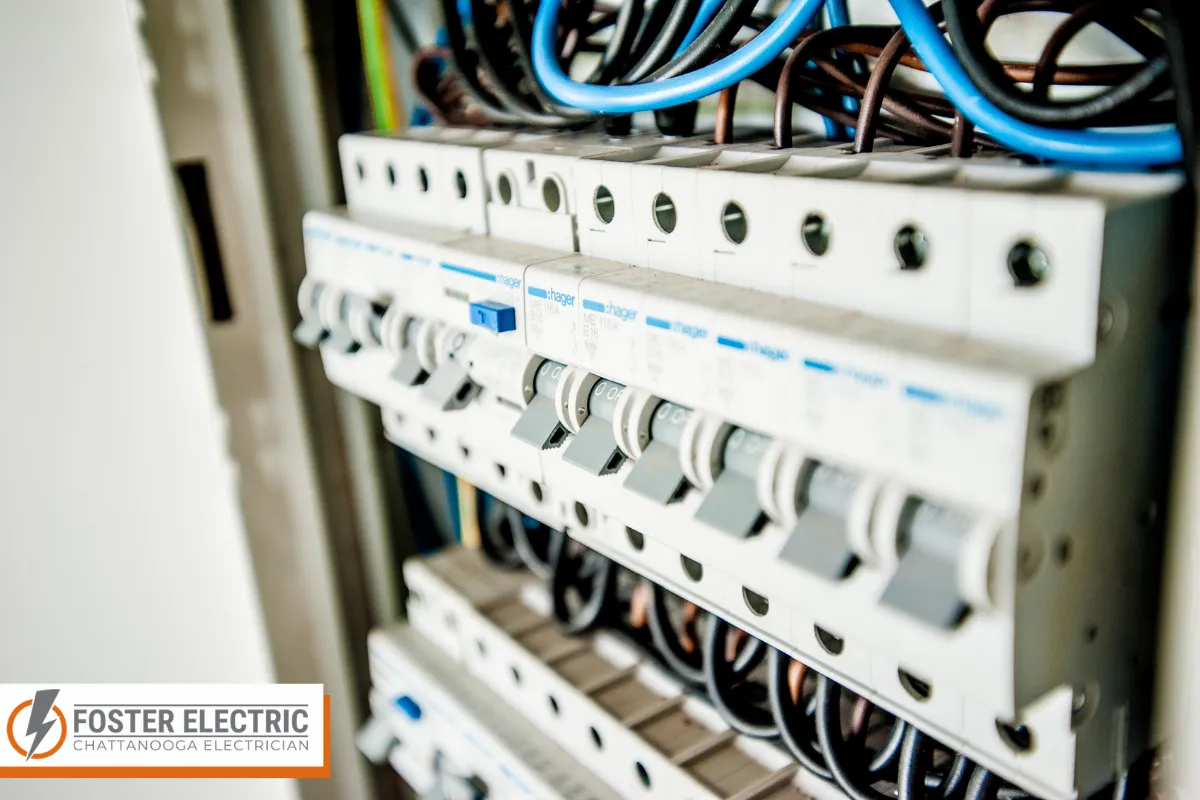
Proactive replacement eliminates the emergency scenario entirely. Instead of reacting to a failure that leaves you without power or, worse, causes a fire, you control the timeline and the cost.
A contemporary panel replacement enhances safety and property appeal. Modern breakers with AFCI and GFCI protection, combined with correct grounding and bonding, reduce the risk of electrical fire and shock for your family, tenants, or employees. The improvement is measurable: panels with properly functioning breakers do not allow sustained overcurrent, and arc-fault devices detect the kind of low-level faults that older panels ignore entirely.
The day-to-day benefits are just as tangible. Fewer nuisance trips mean you stop resetting breakers every time you run the vacuum and the microwave at the same time. Whole-house surge protection, which mounts directly in the panel, guards sensitive electronics against voltage spikes from storms or grid events. Additional breaker spaces give you room for future projects like finished basements, home additions, or outdoor kitchens, all common upgrades in East Ridge and TN Walden. Efficiency improves when your electrical system is correctly sized and every connection is tight.
From a financial perspective, an updated panel improves resale appeal and produces smoother home inspections. Friends and neighbors in TN Harrison or GA Apison who have gone through a home sale with an outdated panel can tell you how much trouble a red-flagged panel creates at closing. Some insurers look more favorably on homes with modern electrical systems, reducing friction at renewal time.
If you are concerned about your panel’s age, capacity, or condition, schedule a professional panel inspection. It is the fastest way to get a clear answer and move forward with confidence.
Electrician in East Ridge, TN – Foster Electric
We are Foster Electric, a trusted electrician serving East Ridge, Tennessee and the prominent surrounding areas including Chattanooga, GA Signal Mountain, and nearby communities. We specialize in electrical panels of every kind: inspections, troubleshooting frequent circuit breaker trips, complete panel upgrades, and service size evaluations for homes and small businesses.
Our licensed team handles every part of the job, from pulling permits with the city to coordinating with the utility and passing final inspection. We follow all local codes, and we focus on safety, clear communication, and fair, upfront pricing for every client. If your panel is outdated, undersized, or showing any of the warning signs covered in this post, we are ready to help.
Call Foster Electric at (423) 826-7270 or fill out our online contact form to schedule a free estimate. Let us take a look at your panel and give you an honest, professional recommendation.
Frequently Asked Questions
How often should an electrical panel be inspected in East Ridge, TN?
A licensed electrician should inspect your panel every three to five years under normal conditions. Homes older than 30 years or properties with heavily loaded systems benefit from more frequent checks. Inspections are also a good idea before buying or selling a property, before adding large appliances like a hot tub or workshop equipment, or after any unexplained power issues such as repeated breaker trips or flickering lights. During the inspection, the professional checks for loose connections, overheating at terminals, correct breaker sizing, and compliance with the current code adopted in East Ridge and Hamilton County.
Can I add more breakers to my existing panel instead of replacing it?
Adding breakers is only safe if the panel has available spaces, the bus bar has capacity for additional circuits, and the service amperage can support the extra load. Double-tapping breakers, where two wires connect to a single breaker terminal not rated for it, is a code violation and a fire risk. Tandem or slim breakers are allowed only in panels specifically listed for them by the manufacturer. Before adding circuits, an electrician must review load calculations and confirm the panel’s specifications. If the panel is already full or near its rated capacity, a replacement or subpanel installation is the safer path.
How long does it take to replace an electrical panel, and will I be without power?
A typical residential panel replacement takes most of a working day, roughly six to eight hours depending on the complexity of the job and whether any wiring corrections are needed. Power must be shut off during the work for safety; there is no way to safely swap a panel while circuits are live. Once the new panel is installed and the city inspector signs off, the electrician energizes the system and restores power. Plan ahead for the outage by charging devices, arranging for refrigerated medications or medical equipment, and informing anyone who works from home about the scheduled downtime.
Do I need to upgrade my panel if I’m installing an electric vehicle charger?
Most Level 2 EV chargers require a dedicated 40 to 60 amp circuit, which is a substantial draw on any residential panel. If your panel is already near capacity or rated at 100 amps or less, adding that circuit without an upgrade could overload the system. An electrician evaluates your available capacity, the condition of the existing wiring, and whether the meter base supports a higher service rating. In many cases, a service upgrade to 200 amps or the addition of a subpanel is recommended. Proper permits and adherence to current code in East Ridge are required for EV charging installations.
What information should I have ready before calling about a panel upgrade?
Before calling, note the panel brand, approximate age, and amperage rating. The amperage is usually printed on the main breaker or the panel label inside the door. Write down any recent electrical issues: breakers that trip, circuits that go dead, burning smells, or warm spots on walls. If you are planning renovations, a new appliance installation, or an addition, mention that as well, because it affects load calculations. Taking a few photos of the panel with the door open, the meter, and the area around the panel gives the electrician a head start on assessing your situation and preparing an accurate estimate.
Disclaimer
Disclaimer: This article provides general electrical panel information for East Ridge, Tennessee residents. Always consult a licensed local electrician for code-specific guidance, required permits, and on-site safety evaluations before proceeding with any electrical work.
Read Can Damaged Wiring Be Repaired Without Full Replacement? Ask an Electrician in East Ridge, TN