
As an electrician working across Chattanooga homes and businesses, this is one of the most common calls we receive. In most cases, a quick, faint spark the instant a plug is inserted is simply the normal result of electricity flowing into the device. It happens because the circuit is live and current rushes to meet the plug’s metal blades.
However, frequent, large, or lingering sparks from outlets require immediate attention because they usually point to problems like loose wiring, worn contacts, or circuits carrying more than they should. Typical warning signs include a burning smell near the receptacle, melted or discolored plastic, warmth radiating from the wall plate, or a circuit breaker that keeps tripping. If you notice any of these in your Chattanooga, TN home, shut off the affected circuit at the panel and schedule an electrical inspection before using that outlet again.
Key Takeaways
- A tiny blue spark when plugging in a device can be normal, but repeated, bright yellow, or noisy sparks signal a dangerous problem that needs immediate attention.
- The most common causes in Chattanooga, TN homes include loose connections, damaged wiring, overloaded circuits, and worn-out receptacles.
- Warning signs like a burning smell, scorch marks, heat buildup around the outlet cover, or a tripping circuit breaker mean you should shut off power right away.
- A licensed electrician should inspect any sparking outlet before it is used again to rule out fire hazards and electrical shocks.
- Code-compliant electrical services protect your home, your family, and your property value over the long term.
How Normal “Contact Sparks” Differ from Dangerous Arcing
Not every spark at an outlet means an emergency. Understanding the difference between a harmless contact spark and dangerous electrical arcing can save you unnecessary worry or, more importantly, prevent a fire.
- A normal contact spark is a tiny blue flicker that lasts a fraction of a second as the plug’s blades meet energized contacts inside the receptacle. There is no sound, no lingering glow, and no smell. A tiny blue spark can occur when plugging in a high-draw appliance like a vacuum or hair dryer, and it is nothing to worry about.
- Dangerous arcing produces bright yellow or orange sparks, often accompanied by a crackling or popping sound. The spark may linger, repeat, or produce a visible flash at the outlet face. Loose connections increase electrical resistance and can spark in exactly this way.
- Electrical arcing often indicates loose internal connections or damaged wiring that violates modern electrical safety practices.
If you see large or repeated sparks, stop using that electrical outlet immediately and turn off the breaker for that circuit.
Common Causes of Sparking Electrical Outlets in Chattanooga Homes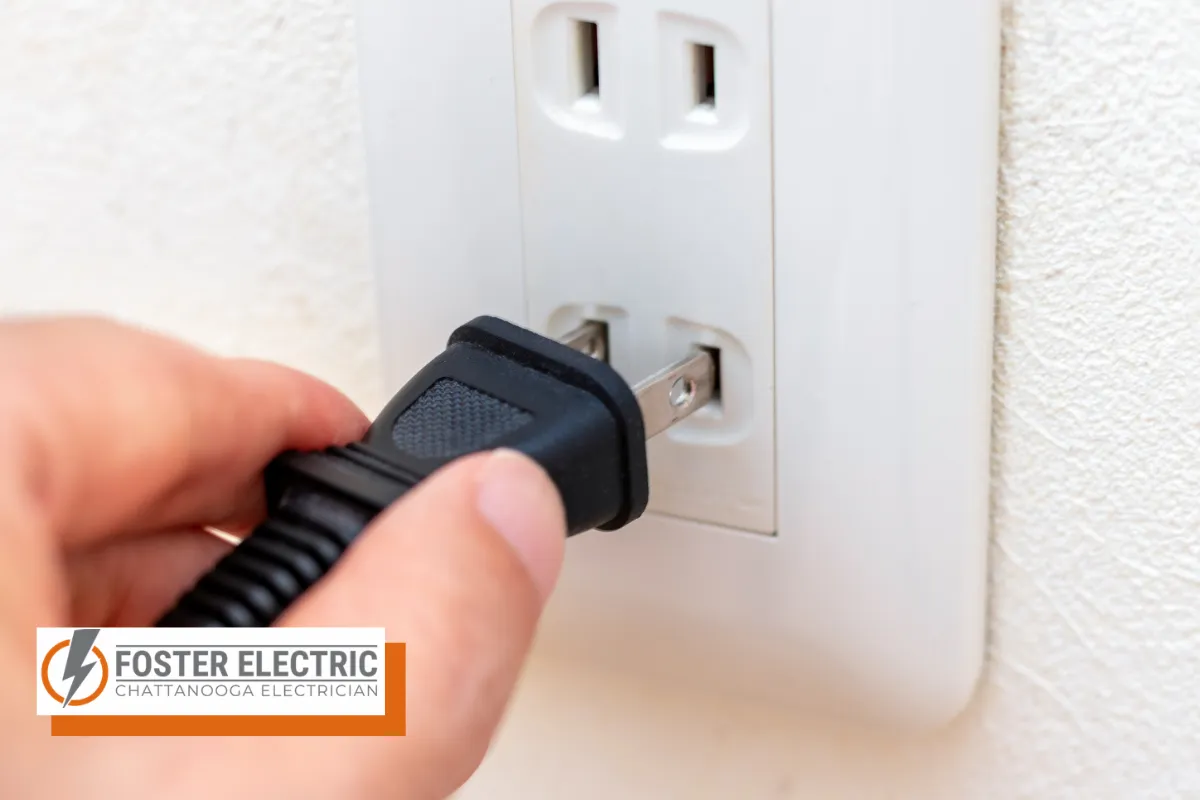
Many homes across Chattanooga were built decades before current safety codes took effect. That history, combined with regional humidity and storm activity, creates a specific set of conditions that make outlets spark. Below are the most common causes a professional electrician will look for during a thorough inspection.
- Loose terminal screws or backstab connections. Loose connections can create air gaps where electricity jumps, causing arcing. Over time, vibration and thermal cycling loosen screws inside the outlet box, increasing resistance at the point where the wire meets the terminal. Loose connections can lead to overheating and sparking if left unaddressed.
- Damaged wiring behind the wall. Insulation degrades from age, rodent damage, or previous overheating. Damaged wiring can lead to overheating and sparking, and faulty wiring is a significant contributor to sparking outlets in older properties. Older wiring methods, including cloth-insulated conductors and knob-and-tube systems, can lead to electrical sparking and arcing as materials break down.
- Overloaded circuits. Overloaded circuits occur when too many high-wattage devices are plugged in on a single branch circuit. Overloading circuits can cause wires to heat up and spark, stressing every connection point along the way. Space heaters, window AC units, and multiple kitchen appliances sharing one circuit are frequent culprits.
- Worn or low-quality receptacles. Aged outlets can produce sparks due to weakened components. Worn-out receptacles lose their grip on plug blades, causing poor connections every time a device is plugged in. Many older houses around Chattanooga, TN still have original receptacles that no longer hold plugs securely.
- Moisture intrusion. Kitchens, bathrooms, garages, and outdoor receptacles are all vulnerable. Moisture can cause corrosion and lead to sparking outlets by degrading metal contacts and creating unintended conduction paths. Moisture intrusion can trigger short circuits and cause sparks in outlets, and short circuits happen when a hot wire touches a neutral or ground wire through that corrosion pathway.
- Power surges and lightning events. Sudden voltage spikes from storms or utility disturbances can weaken internal outlet components and degrade insulation, increasing the risk of future sparking. Surge protection at the panel level helps, but it does not undo damage that has already occurred.
Warning Signs That Mean an Outlet Spark Is Not Safe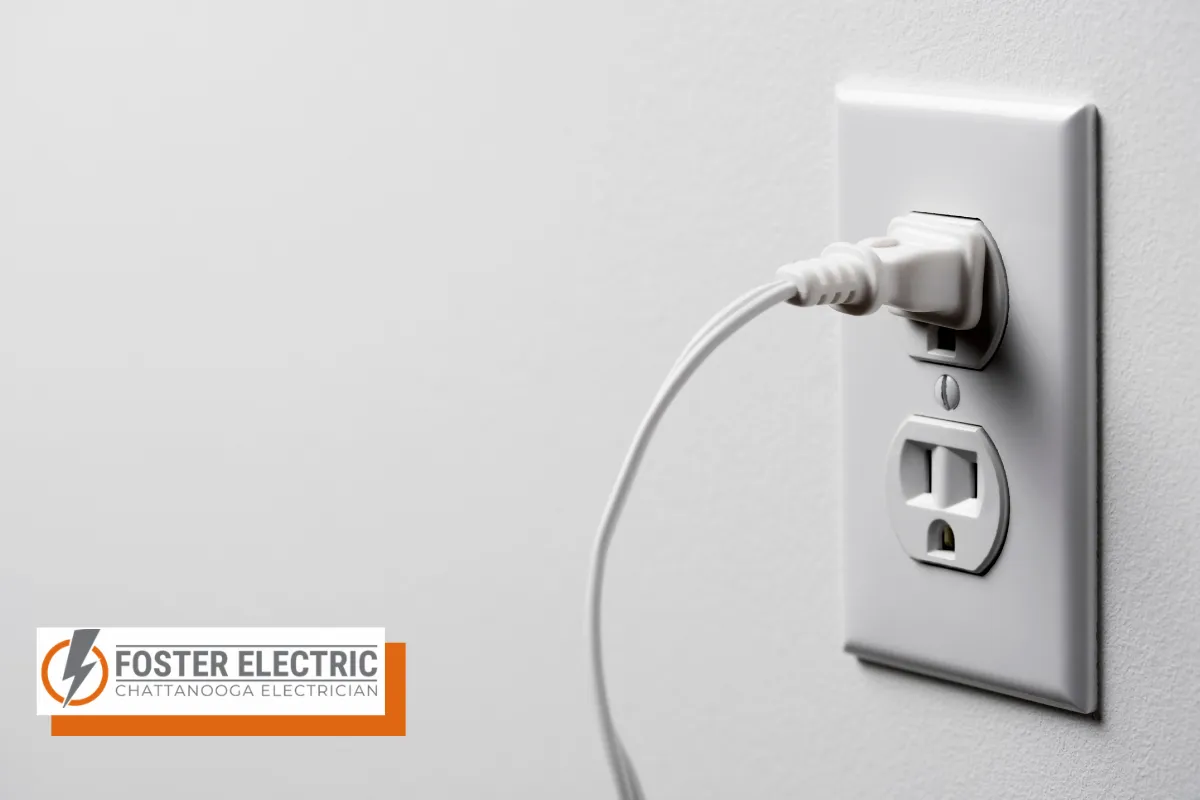
Sparks paired with other symptoms are a serious electrical safety red flag. Electrical sparks can indicate a serious safety hazard involving fire risks, so treating these warning signs seriously is not optional. Sparking outlets increase the risk of electrical shocks, especially in areas near water or where children are present.
- Visible signs include brown or black scorch marks on the outlet cover or surrounding drywall, melted plastic, and discoloration on nearby baseboards. Check for visible damage like scorch marks or discoloration any time you notice unusual behavior from an outlet.
- Sensory clues include a burning odor or the smell of burning plastic, a hot or warm outlet cover, and buzzing or sizzling sounds when the outlet is in use. A burning smell near a receptacle should never be ignored.
- Performance issues include flickering lights when something is plugged into a particular outlet, devices randomly shutting off, tripped breakers, and frequent power outages on a single circuit.
If any of these symptoms appear, shut off power at the electrical panel and contact a licensed electrical contractor before using that circuit again.
First Safety Steps to Take When an Outlet Sparks
Stay calm and follow these steps in order. Quick, measured action reduces the chance of personal injury or property damage.
- Do not touch a sparking outlet, especially if you see smoke, flames, or hear loud popping sounds. Keep children and pets away from the affected area.
- Turn off power at the circuit breaker immediately. Locate the labeled breaker for that circuit, switch it fully to the OFF position, and verify that power is cut by checking whether nearby outlets and lights are dead.
- Unplug all devices connected to the sparking outlet, but only after the breaker is off. Avoid yanking cords from a live receptacle.
- Do not use the outlet again until inspected by a professional. Sparking outlets can ignite nearby flammable materials, so leaving the circuit de-energized is the safest course of action.
- Do not use water on any electrical fire. If there is visible fire or heavy smoke, call emergency services first.
- Contact a licensed electrician for further inspection and repair. Once the area is safe, the next step is a professional electrical inspection, not a DIY repair attempt.
Read Why Does One Room Lose Power? Tips from an Electrician in Chattanooga, TN
How Electricians Diagnose Sparking Outlets in Chattanooga, TN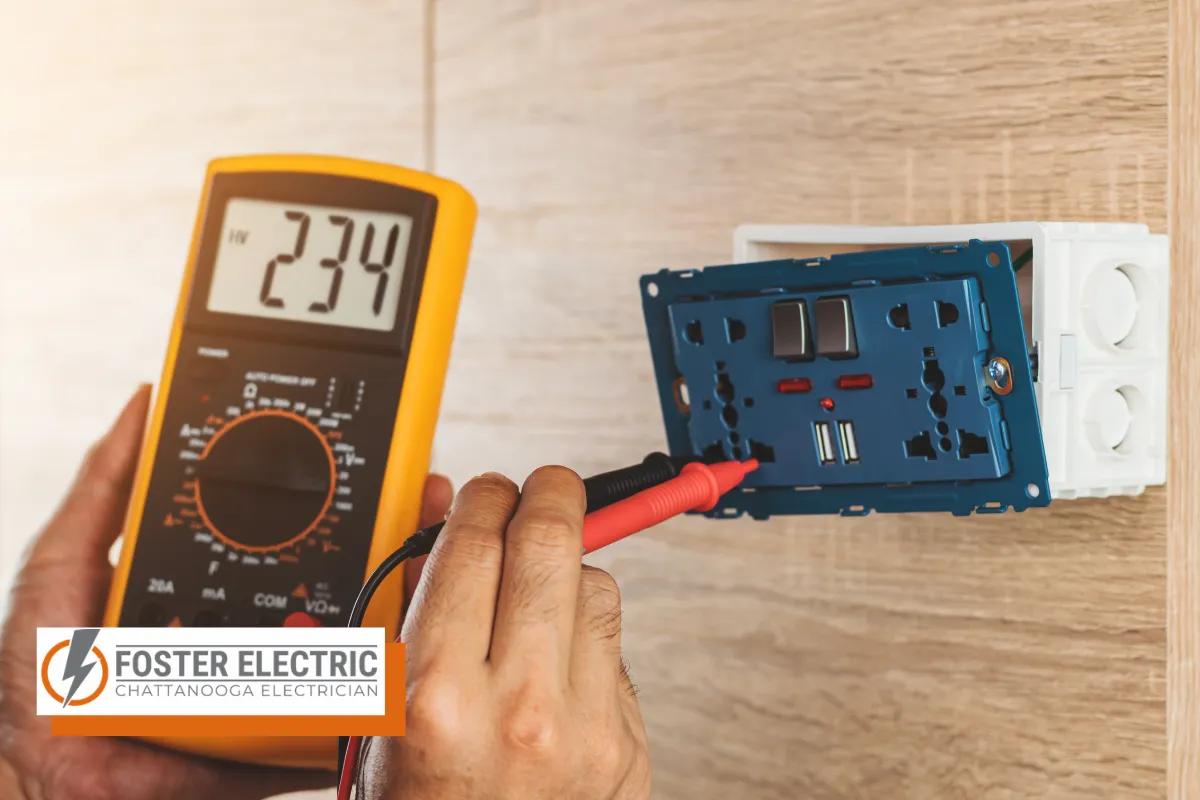
Licensed electricians follow the National Electrical Code and local Tennessee requirements when evaluating a sparking outlet. The process is methodical and designed to find the root cause rather than mask the symptom.
- The initial step is a visual inspection. With power off, the technician removes the cover plate and examines the outlet box for loose wires, melted insulation, charred conductors, or exposed wires behind the receptacle.
- Licensed electricians use specialized tools for safe inspections, including non-contact voltage testers, multimeters, and receptacle testers to confirm proper polarity, grounding, and voltage levels. These instruments reveal problems invisible to the naked eye.
- The electrician traces the circuit back to the electrical panel to check breaker size, wire gauge, labeling, and overall circuit condition. This step uncovers whether a mismatch between the breaker rating and the wire size exists.
- The technician also evaluates the circuit’s capacity and the total electrical load on that branch to determine whether modern appliances are routinely overloading it.
- Professional electricians can identify hidden electrical faults, such as damaged wiring behind drywall or deteriorating connections at junction boxes. Qualified electricians ensure compliance with local building codes, including the 2023 NEC expansion of ground fault circuit interrupter requirements in kitchens.
Findings determine whether the remedy is a simple outlet replacement, a wiring repair, the addition of dedicated circuits, or panel work.
Repairs and Upgrades That Stop Outlet Sparks for Good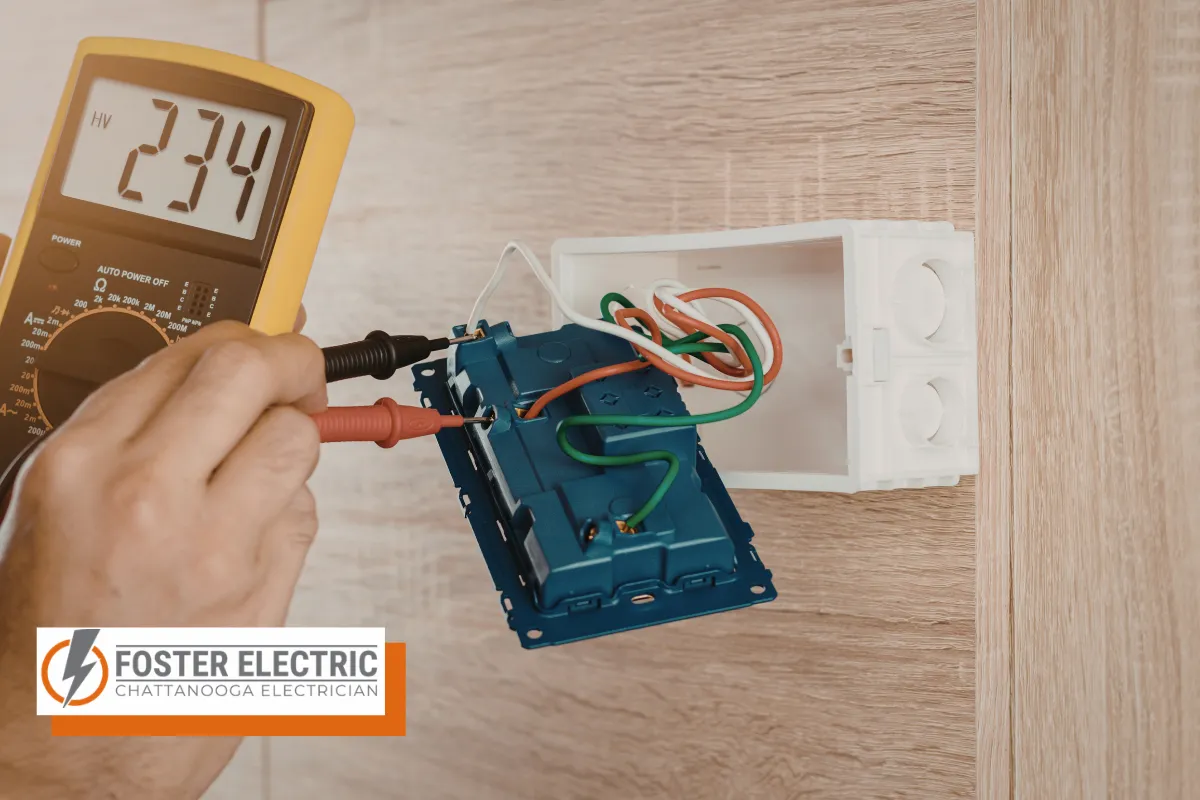
Lasting solutions focus on removing the root cause, not just swapping an outlet cover. An electrical contractor experienced with Chattanooga’s housing stock will recommend repairs proportional to the problem.
- Upgrading a damaged outlet to a modern, tamper-resistant or GFCI receptacle where code requires added protection. Ground Fault Circuit Interrupters are required in wet areas to prevent shocks, and the 2023 NEC expanded that requirement to all kitchen wall receptacles in dwellings.
- Rewiring poor connections with proper pigtails and screw terminals instead of backstab connections. This single change dramatically improves contact reliability and reduces heat damage at the terminal.
- Repairing or replacing sections of damaged wiring, junction boxes, or connectors discovered during troubleshooting. Electrical fires often start inside walls, hidden from view, so addressing compromised conductors before they fail is critical.
- Replacing a failing breaker, correcting labeling, or balancing loads across circuits to reduce stress on individual outlets. An electrical panel upgrade may be necessary in homes where the existing panel lacks sufficient capacity for modern demands.
- In older homes, adding new dedicated circuits for heavy-draw appliances such as EV chargers, space heaters, or home office equipment may be the most effective way to prevent future sparks and achieve safe, reliable performance.
Preventing Future Sparks: Everyday Habits and Maintenance
Prevention combines safe daily use, periodic checks, and scheduled professional maintenance. Small habits go a long way toward avoiding outlet problems down the road.
- Avoid plugging too many devices into a single outlet using multiple power strips or extension cords. Distributing devices across multiple outlets prevents circuit overload and reduces strain on any one receptacle.
- Feel electrical outlets occasionally. Warmth, vibration, or intermittent buzzing should trigger a call to schedule service with a qualified residential electrician.
- Regular electrical maintenance should be scheduled annually to biennially, especially in homes over 25 to 30 years old in Chattanooga, TN. Electrical systems should be updated every 25 years for safety to keep pace with evolving code requirements and household demands.
- Replace loose or wobbly outlets proactively rather than waiting for continued sparking or a burning smell. Inspect outlets regularly for visible damage or discoloration as part of routine home upkeep.
- Keep moisture away from receptacles. Use weather-resistant covers and GFCI devices on all outdoor and wet-area outlets to reduce spark risk and maintain electrical safety.
Outlet Sparks, Burning Smells, and Your Electrical Panel
A sparking outlet and a problem at your electrical panel are often connected. Understanding that relationship helps you see the bigger picture of your home’s electrical system.
A breaker that trips whenever a certain outlet is used may indicate an overloaded circuit or a hidden wiring fault deeper in the branch. Overloading circuits can cause wires to heat up throughout the run, not just at the receptacle. A hot or humming breaker, or a panel with visible rust or discoloration, should be evaluated promptly by a professional.
Older panels with limited capacity can contribute to chronic overloads that age outlets faster than normal. If outlet problems keep recurring, have a residential electrician review the panel’s condition and sizing to determine whether restoring power safely requires broader upgrades. Any panel work in Chattanooga must follow Tennessee licensing laws and applicable local building codes.
Why DIY Electrical Outlet Repairs Can Be Dangerous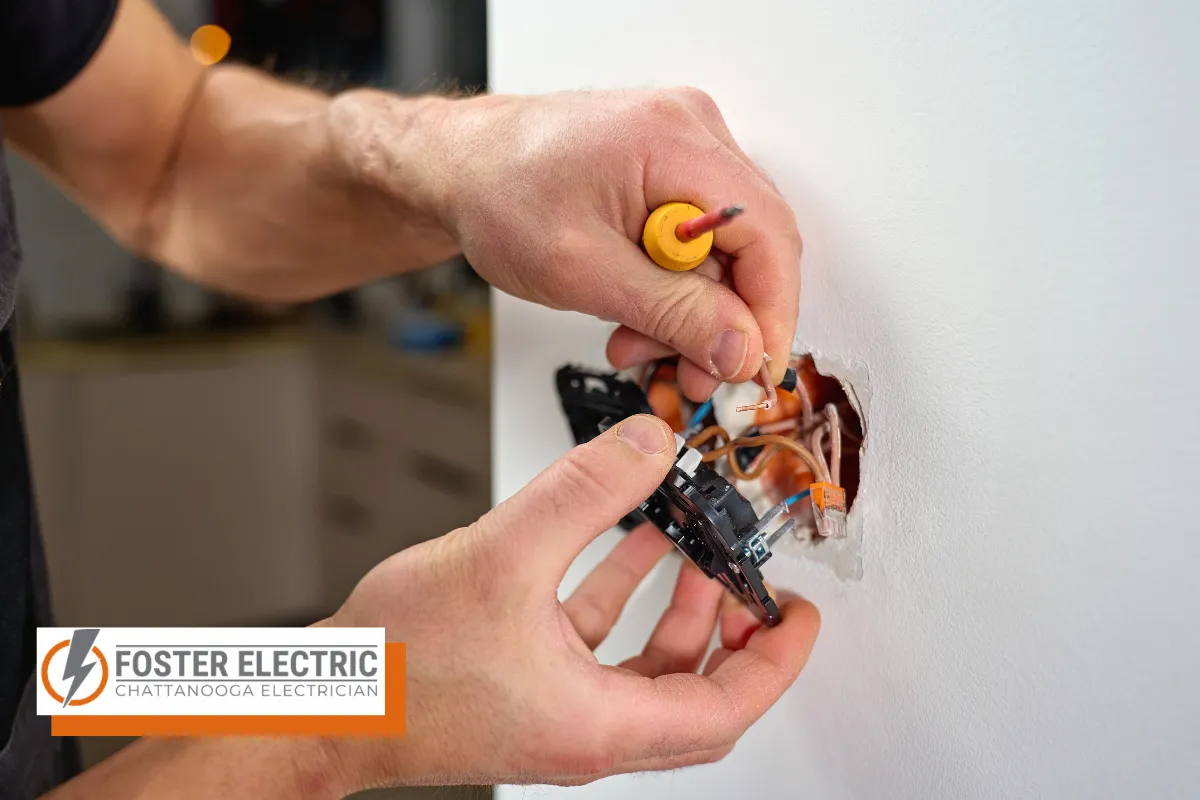
Online tutorials make electrical repairs look simple, but they often skip critical details like proper grounding, correct wire sizing, and electrical load calculations. Attempting these fixes without proper training introduces serious safety risks.
- Miswired hot, neutral, and ground conductors can leave metal parts energized, dramatically increasing the chance of electrical shocks. A poor installation that reverses polarity or skips grounding is invisible from the outside but dangerous from the inside.
- Using the wrong outlet type, amperage rating, or wire size can cause overheating and fire hazards over time. Not every receptacle is interchangeable, and matching components to the circuit matters.
- In Tennessee, most significant electrical work must be done by licensed professionals to meet inspection requirements. Hiring professionals minimizes risks of accidents or injuries, and electrical work must meet safety standards to prevent hazards.
- Handle only basic tasks like resetting a tripped breaker or unplugging devices from a de-energized outlet. Leave internal electrical repairs to a certified electrician.
- Proper, documented work by a licensed electrician helps protect insurance coverage if an electrical incident ever occurs. Undocumented or unpermitted work can create legal and financial complications for homeowners.
Electrician in Chattanooga, TN – Foster Electric
At Foster Electric, we are proud to serve as a trusted electrician for homeowners and businesses across Chattanooga, Tennessee and the prominent surrounding areas. Our team handles sparking outlets, burning smells, circuit breaker issues, complete electrical inspections, and full-scale electrical work for both residential and commercial properties. We stay current on all electrical codes and safety practices so you can trust that every repair protects your family and property.
Whether you need additional outlets installed, a professional inspection of aging wiring, or an electrical panel upgrade, we deliver clear explanations, upfront options, and long-term solutions. We never settle for quick, temporary fixes.
Call us today at (423) 892-6759 or fill out our online contact form to schedule service. Foster Electric is here to keep your home safe and your electrical system running right.
Frequently Asked Questions
Is It Okay to Keep Using an Outlet That Only Sparked Once?
A single tiny blue spark during plug-in is generally normal and occurs because electricity flows into the device the moment metal contact is made. However, if the spark was bright, yellow or orange, made a popping sound, or lasted more than an instant, that is not normal behavior. After the spark, turn off the breaker and perform a visual inspection of the outlet for discoloration, melted plastic, or any burning odor. If you find any visible damage, do not use the outlet again. Even if everything looks fine on the surface, intermittent electrical issues can worsen over time as connections loosen further or insulation continues to degrade. It is always safer to have a certified electrician evaluate the circuit rather than assume a one-time event will not repeat.
How Often Should Older Chattanooga Homes Get an Electrical Inspection?
For homes over 25 years old, scheduling a professional inspection every five to ten years is a solid guideline. If your home shows warning signs such as frequent breaker trips, flickering lights, warm outlets, or a burning smell from any receptacle, move that timeline up significantly. Major renovations, new HVAC equipment, or the addition of high-demand appliances like EV chargers are also ideal times to have the entire home evaluated. Regular inspections help identify damaged wiring, overloaded circuits, and outdated components before they produce sparks or cause electrical fires. Data rates of electrical failure climb sharply in aging systems, making proactive evaluation one of the smartest investments a homeowner can make.
Can Whole-House Surge Protection Stop Outlets from Sparking?
Whole-house surge protection reduces damage from external voltage spikes caused by storms or utility grid events, but it does not fix existing problems like loose wiring, corroded terminals, or a worn receptacle. These devices work by diverting high-energy surges away from your home’s electrical system before they reach individual outlets and appliances. However, if an outlet is already loose, corroded, or showing heat damage, it can still produce sparks even with surge protection installed. The best approach is combining surge protection with proper outlet maintenance, timely electrical repairs, and periodic professional assistance to address any developing faults. Think of surge protection as one layer of defense, not a complete solution on its own.
What Type of Outlets Are Safest Near Water and Outdoors?
Ground fault circuit interrupter outlets are required by modern code near sinks, laundry areas, garages, and all outdoor locations. A GFCI device continuously monitors the flow of current through the circuit and shuts off power within milliseconds if it senses an imbalance, which typically indicates a ground fault that could cause an electrical shock. Outdoor GFCI receptacles should be mounted in weather-resistant enclosures with in-use covers to prevent moisture from reaching the contacts while cords are plugged in. Having a qualified electrician install or upgrade these outlets ensures they meet current safety standards and function correctly, which is especially important in a humid climate like Chattanooga where moisture-related electrical problems are common.
What Details Should I Share When Calling an Electrician About a Sparking or Smoking Outlet?
Provide as much detail as possible about what you saw, heard, and smelled. Describe the color and duration of the spark, whether there were any scorch marks or melted areas on the outlet cover or wall, and whether you noticed a burning smell. Let the electrician know if the circuit breaker tripped, which devices were plugged in at the time, and approximately how old the outlet and panel are if you have that information. Mention whether the outlet is in a kitchen, bathroom, garage, or outdoor space, since that context helps prioritize moisture-related safety risks. Clear information allows the electrician to bring appropriate tools, materials, and safety gear for faster, safer repairs and helps with restoring power as efficiently as possible.
Disclaimer
This article provides general educational information about electrical safety and is not a substitute for a hands-on evaluation by a qualified professional. Do not perform unlicensed electrical work. Always consult a licensed electrician and follow current Chattanooga and Tennessee electrical codes for all inspection and repair decisions.
Read Are Childproof Outlets Worth Installing? An Electrician in Chattanooga, TN Explains