
Why Permits Matter More Than Most Homeowners Realize
Chattanooga Electrician questions often start with a simple concern: “Do I really need a permit for this electrical work?” The problem is that many homeowners begin repairs or upgrades without realizing local rules apply, even for work that seems minor. That can lead to failed inspections, fines, insurance issues, or unsafe wiring hidden behind walls. Electrical systems are unforgiving when mistakes happen, and unpermitted work can put your home and family at risk. The solution is understanding which projects require approval and when a licensed electrician should be involved. This guide explains how permits work in Chattanooga, Tennessee, and what electrical services legally require one.
How Electrical Permits Work in Chattanooga, Tennessee
Electrical permits exist to protect property owners, occupants, and future buyers. In Chattanooga and Hamilton County, electrical work must comply with adopted building codes based on the National Electrical Code (NEC), along with local amendments. Permits ensure that installations are inspected and verified as safe.
A permit is typically issued before work begins. After the job is completed, a city or county inspector checks the installation. Approval confirms that the wiring, materials, grounding, and load calculations meet current standards.
Failing to obtain a permit can result in:
- Stop-work orders
- Required removal of completed wiring
- Fines or penalties
- Problems during home sales
- Denied insurance claims after electrical fires
Permits are not just paperwork. They are a safety checkpoint.
Who Can Pull an Electrical Permit in Chattanooga?
Licensed Electricians
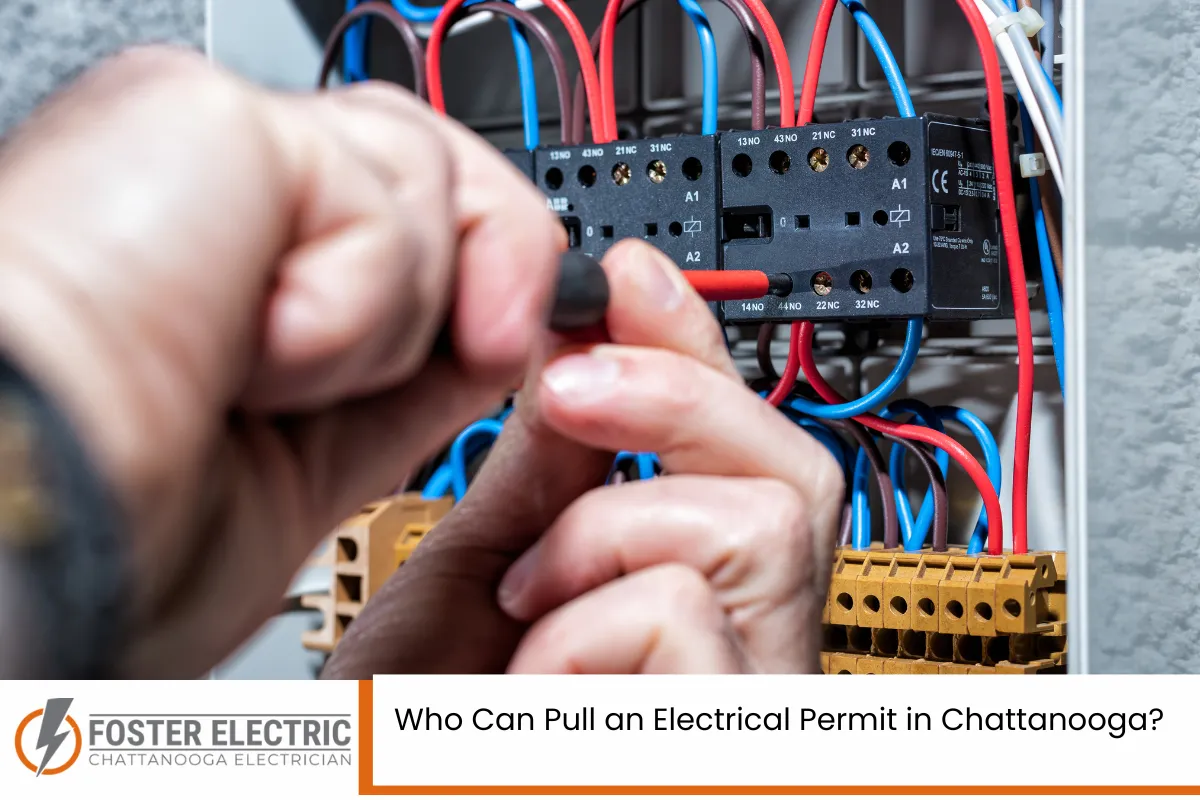
Most electrical permits are pulled by licensed electrical contractors. A licensed electrician understands code requirements, inspection procedures, and safety standards. This is the most common and recommended approach for residential and commercial projects.
Homeowners Performing Their Own Work
In Tennessee, homeowners may be allowed to pull permits for electrical work on their primary residence, provided they personally perform the work. However, this does not apply to rental properties, multi-family buildings, or commercial spaces. Even when allowed, the homeowner is held to the same code standards as a professional.
Property Managers and Investors
Property managers, landlords, and real estate investors typically cannot pull their own electrical permits unless they hold proper licensing. Electrical services for these properties usually require a licensed contractor.
Electrical Projects That Always Require a Permit
Some types of electrical work consistently require a permit due to safety risks and code impact.
Electrical Panel Installation or Replacement
Any work involving the main service panel requires a permit. This includes:
- Panel upgrades
- Replacing outdated fuse boxes
- Increasing amperage service
- Installing subpanels
These projects affect the entire electrical system and must be inspected to ensure proper grounding, bonding, and load capacity.
New Electrical Circuits
Adding new circuits is not considered minor work. A permit is required when:
- Installing outlets in new locations
- Adding dedicated circuits for appliances
- Expanding circuits for remodels or additions
Inspectors verify wire size, breaker ratings, and arc-fault or ground-fault protection.
Whole-Home Rewiring Projects
Rewiring older homes is a major electrical service that always requires a permit. This includes replacing knob-and-tube wiring or aluminum wiring. These projects involve opening walls and updating grounding systems to modern code standards.
Electrical Work for Home Additions
Any addition that includes electrical wiring requires permitting. This applies to:
- Room additions
- Garage conversions
- Finished basements
- Accessory dwelling units
Electrical inspections are coordinated with building inspections to ensure compliance.
Common Remodeling Projects That Trigger Permit Requirements
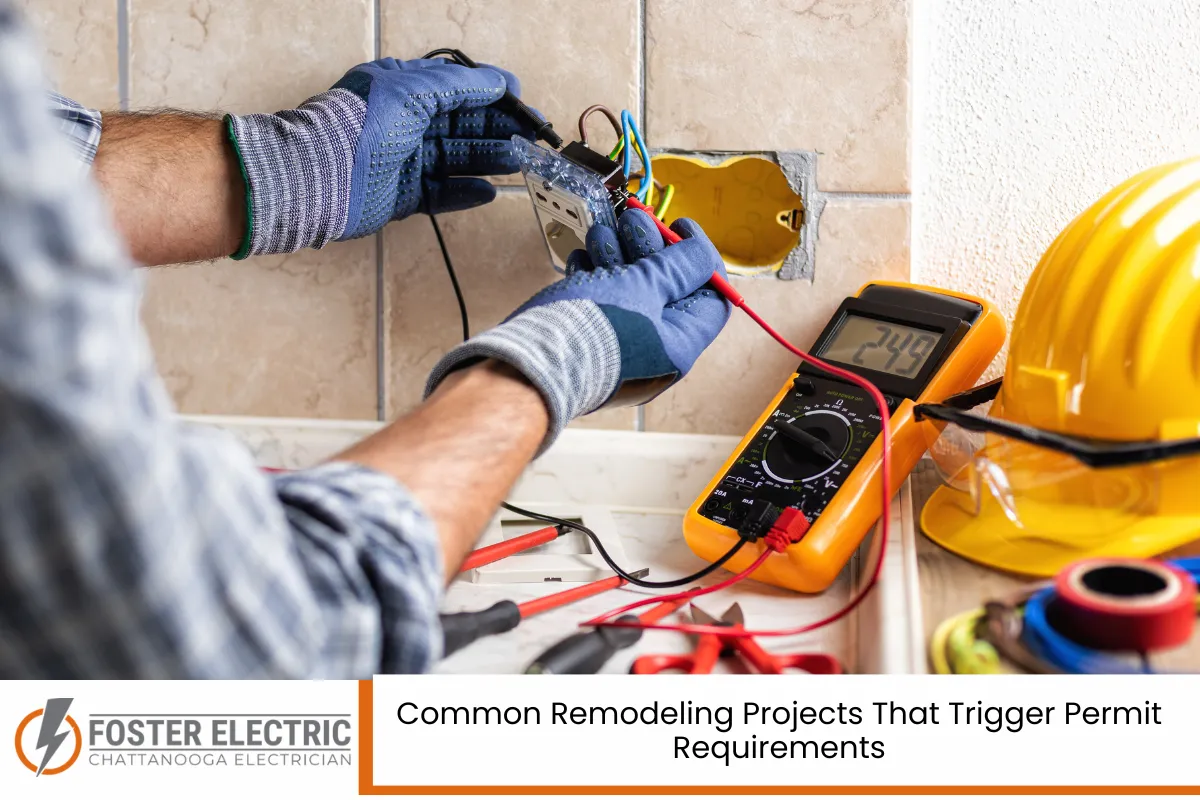
Many homeowners are surprised to learn that remodeling often involves permitted electrical work.
Kitchen Renovations
Kitchen upgrades almost always require permits due to appliance circuits and safety rules. This includes wiring for:
- Ranges and ovens
- Dishwashers and disposals
- Countertop outlets
- Lighting upgrades
Kitchens require specific spacing and protection rules under the NEC.
Bathroom Electrical Upgrades
Bathrooms involve moisture and higher shock risk. Permits are required for:
- New outlets
- Lighting changes
- Exhaust fans with electrical connections
- Heated flooring systems
Ground-fault protection and proper circuit sizing are critical.
Laundry Room Electrical Changes
Installing or relocating washer and dryer circuits requires a permit. Electric dryers need dedicated 240-volt circuits, which must be inspected.
Read Do I Need a Chattanooga Electrician to Install a Smart Thermostat?
Outdoor and Exterior Electrical Work That Needs Approval
Exterior wiring is exposed to weather and soil conditions, making permits essential.
Electrical Service for Pools and Hot Tubs
Pools and spas have strict bonding and grounding requirements. Permits are required for:
- Pool pumps and heaters
- Hot tubs and spas
- Pool lighting
- Outdoor disconnects
Improper installation can be extremely dangerous.
Detached Structures and Sheds
Running power to a shed, workshop, or detached garage requires a permit. This includes underground conduit, subpanels, and grounding systems.
Exterior Lighting and Power
Permits are usually required when installing:
- Hardwired landscape lighting systems
- Outdoor outlets
- Security lighting tied into the home’s electrical system
Low-voltage lighting may have different requirements, but it depends on how it is powered.
Electrical Work That May Not Require a Permit
Not every electrical task requires approval, but limitations apply.
Like-for-Like Replacements
Replacing existing fixtures without altering wiring may not require a permit, such as:
- Swapping light fixtures
- Replacing switches or outlets in the same location
- Changing ceiling fans without modifying circuits
These replacements must still meet current safety rules.
Minor Repairs
Small repairs, such as replacing a damaged outlet cover or tightening connections, typically do not require permits.
Plug-In Equipment
Equipment that plugs into an existing outlet usually does not require permitting, provided no wiring changes are made.
Local enforcement may vary, so checking before starting work is always wise.
Why Electrical Permits Protect Homeowners Long-Term
Permits are often viewed as a hassle, but they provide real benefits.
Improved Safety
Inspections catch issues that could lead to fires, shocks, or system failures. Many electrical hazards are hidden behind walls and ceilings.
Insurance Protection
Insurance companies may deny claims related to unpermitted electrical work. A permit provides documentation that work was completed properly.
Higher Property Value
During a home sale, buyers and inspectors often request permit records. Properly permitted electrical services can prevent delays or price reductions.
Legal Compliance
Permits keep property owners in compliance with Chattanooga building regulations and avoid potential penalties.
What Happens During an Electrical Inspection?
After permitted work is completed, an inspection is scheduled. The inspector typically checks:
- Correct wire sizes and materials
- Proper breaker and circuit labeling
- Grounding and bonding systems
- GFCI and AFCI protection
- Code-compliant installation methods
If issues are found, corrections must be made before approval is granted.
Risks of Skipping an Electrical Permit
Avoiding permits can create long-term problems.
- Work may need to be removed and redone
- Home sales can be delayed or canceled
- Fines may be issued by local authorities
- Safety hazards may go unnoticed
What saves time upfront can cost significantly more later.
When to Call a Licensed Electrician Before Starting Work
If a project involves altering wiring, adding circuits, or connecting new equipment, calling a professional electrician early is the safest choice. A licensed electrician can determine whether a permit is required and handle the process correctly.
Electrical services that look simple often involve hidden risks. Professional guidance prevents costly mistakes.
Chattanooga Electrician – Foster Electric
Foster Electric proudly provides trusted electrical services in Chattanooga, Tennessee. If you are unsure whether your project requires a permit, our experienced electrician team can guide you from planning to final inspection. We handle panel upgrades, rewiring, remodeling projects, and code-compliant repairs with attention to safety and detail. Our knowledge of local permitting requirements helps homeowners avoid delays and costly corrections. Whether you are upgrading your home or addressing an urgent electrical issue, Foster Electric is ready to help. Call (423) 892-6759 or visit our website to schedule service, request an estimate, or fill out our contact form today.
Frequently Asked Questions
Do I need a permit to replace an electrical panel with the same size?
Yes, a permit is still required even if the panel amperage remains the same. Electrical panels are critical safety components, and inspectors must verify grounding, bonding, breaker compatibility, and labeling. Older panels often do not meet current code requirements, so inspections ensure updates are properly installed. Skipping a permit can cause problems during insurance claims or future inspections. A licensed electrician will handle the permit process and ensure the replacement meets all applicable standards.
Can unpermitted electrical work affect a home inspection when selling?
Unpermitted electrical work frequently causes issues during real estate transactions. Home inspectors may note visible upgrades without permit records, raising red flags for buyers and lenders. This can lead to demands for retroactive permits, repairs, or price reductions. In some cases, sellers must open walls or redo work to satisfy code requirements. Permitted electrical services provide documentation that protects the seller and builds buyer confidence during closing.
Are permits required for installing electric vehicle chargers at home?
In most cases, yes. Electric vehicle chargers typically require dedicated circuits and may increase electrical load on the panel. Permits ensure the panel can safely handle the demand and that wiring meets current code. Inspections verify breaker sizing, grounding, and installation methods. Installing a charger without a permit can create safety risks and void warranties. A professional electrician can assess capacity and handle the permit process correctly.
What happens if an electrical inspection fails?
If an inspection fails, the inspector will issue a list of corrections that must be addressed. This does not mean the project is unsafe, but adjustments are required to meet code. After corrections are completed, a reinspection is scheduled. Licensed electricians are familiar with common inspection issues and can resolve them efficiently. Passing inspection confirms the electrical work is safe, compliant, and properly documented.
Can permits be pulled after electrical work is already completed?
In some cases, retroactive permits may be allowed, but the process can be more complicated. Inspectors may require portions of the work to be exposed for evaluation. Corrections or full replacement may be necessary if code violations are found. Fees may also be higher. Obtaining permits before starting work is always easier, less expensive, and safer than attempting to legalize unpermitted installations later.
Disclaimer: This article is for general informational purposes only and does not replace guidance from licensed electricians or local building authorities. Electrical codes and permit requirements may change. Always verify current regulations with the appropriate local office or a qualified professional before starting electrical work.
Read Chattanooga Electrician: When Should I Upgrade My Home’s Electrical System?